Search This Blog

2026 Bookish Books Reading Challenge (hosted by Yours Truly)

My Progress:


30 / 30 bookish books. 100% done!

2026 Cover Lovers Reading Challenge (hosted by Yours Truly)

2026 Cover Lovers Reading Challenge (hosted by Yours Truly)

My Progress:


46 / 50 books. 92% done!

2026 Literary Escapes Challenge

- Alabama
- Alaska (1)
- Arizona (2)
- Arkansas (1)
- California (8)
- Colorado (2)
- Connecticut (1)
- Delaware
- Florida (3)
- Georgia (1)
- Hawaii (1)
- Idaho (2)
- Illinois (2)
- Indiana (2)
- Iowa (1)
- Kansas
- Kentucky (1)
- Louisiana (2)
- Maine (4)
- Maryland (1)
- Massachusetts (2)
- Michigan (2)
- Minnesota (2)
- Mississippi (1)
- Missouri
- Montana (1)
- Nebraska (1)
- Nevada
- New Hampshire (1)
- New Jersey (1)
- New Mexico (1)
- New York (5)
- North Carolina (2)
- North Dakota (1)
- Ohio (4)
- Oklahoma
- Oregon (2)
- Pennsylvania (1)
- Rhode Island (1)
- South Carolina (1)
- South Dakota (1)
- Tennessee (2)
- Texas (3)
- Utah (1)
- Vermont (2)
- Virginia (1)
- Washington (2)
- West Virginia
- Wisconsin (3)
- Wyoming(1)
- Washington, D.C.*

International:

- Australia (7)
- Austria (1)
- Canada (3)
- England (24)
- Fiji (1)
- France (1)
- Ireland (3)
- Italy (2)
- Mexico (1)
- Morocco (1)
- New Zealand (1)
- Norway (1)
- Scotland (2)
- The Bahamas (1)
- Vatican City (1)

My Progress:


43 / 51 states. 84% done!

2026 Historical Fiction Reading Challenge

My Progress:


25 / 25 books. 100% done!

2026 POPSUGAR Reading Challenge

My Progress:


34 / 50 books. 68% done!

Booklist Queen's 2026 Reading Challenge

My Progress:


40 / 52 books. 77% done!

2026 52 Club Reading Challenge

My Progress:


37 / 52 books. 71% done!

2026 Build Your Library Reading Challenge

My Progress:


25 / 40 books. 63% done!

2026 Craving for Cozies Reading Challenge

My Progress:


30 / 51 cozies. 59% done!

2026 Medical Examiner Mystery Reading Challenge

2026 Mount TBR Reading Challenge

My Progress


25 / 25 books. 100% done!

2026 Around the Year in 52 Books Reading Challenge

My Progress


45 / 52 books. 87% done!

Shelf Reflection Candy Reading Challenge for Kids (and Adults)

My Progress:


59 / 65 books. 91% done!

2026 Countdown Reading Challenge

My Progress:


55 / 55 books. 100% done!

2026 Series Reading Challenge


25 / 36 books. 69% done!

Dragon Rambles' Law of Fives Bingo

Dragon Rambles' Law of Fives Bingo

My Progress:


74 / 125 books. 59% done!

2026 Southern Literary Reading Challenge

My Progress:


17 / 20 books. 85% done!

2026 Reading Challenge (by Linz the Bookworm)

My Progress:


41 / 60 books. 68% done!

2026 Pioneer Book Reading Challenge

2026 Pioneer Book Reading Challenge

My Progress:


10 / 40 books. 25% done!

European Reading Challenge 2026

My Progress:


7 / 50 books. 14% done!

2017 Pick Your Poison Reading Challenge (retired challenge - doing old boards for fun)

My Progress:


79 / 125 books. 63% done!

2026 Reading Challenge Addict Reading Challenge

My Progress:


4 / 5 challenges. 80% done!

The 100 Most Common Last Names in the U.S. Reading Challenge

My Progress:


98 / 100 names. 98% done!

The Life Skills Reading Challenge

My Progress:


76 / 80 skills. 95% done!
Showing posts with label Pioneers. Show all posts
Thursday, December 16, 2021

Mormon Mentions: Daniel James Brown

If you're not sure what a Mormon is, let alone a Mormon Mention, allow me to explain:  My name is Susan and I'm a Mormon (you've seen the commercials, right?). As a member of  The Church of Jesus Christ of Latter-Day Saints (commonly known as the Mormon or LDS Church), I'm naturally concerned with how my religion is portrayed in the media. Because this blog is about books, every time I see a reference to Mormonism in a book written by someone who is not a member of my church, I highlight it here. Then, I offer my opinion—my insider's view—of what the author is saying.  It's my chance to correct misconceptions, expound on principles of the Gospel, and even to laugh at my (sometimes) crazy Mormon culture.

Just to be clear, my father only has one wife. As does my husband. No, I do not have horns hidden underneath my hair, nor am I a member of a cult. Believe it or not, I have been asked all of these questions before!

----

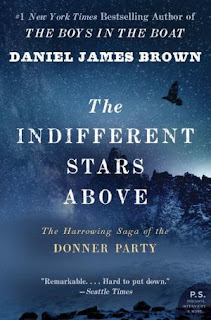
In The Indifferent Stars Above, Daniel James Brown mentions Mormons—who, under the direction of Brigham Young, established a colony in Utah's Salt Lake Valley in July 1847, a year after the Donner Party took their ill-fated journey—four times. I chose just two of the passages to talk about here.

"For the next two weeks, they [the Donner Party] rolled northwest, passing and being passed by elements of what had been the Russell Party, now under the leadership of Lilburn Boggs, the fiercely anti-Mormon former governor of Missouri who had taken over leadership when Russell resigned on June 18" (77)

Lilburn Boggs is a well-known villain in Mormon history. I grew up hearing tales of his hateful persecution of early members of The Church of Jesus Christ of Latter-day Saints. From 1836 to 1840, he served as governor of Missouri, where he dealt with heated conflict between members of the Church and residents of Missouri, who were concerned about the influx of Mormon settlers to the area. Many Missourians were outraged by their presence and sought to drive the religious group out of Missouri. Boggs agreed, issuing Missouri Executive Order 44 (known as the "Extermination Order") on October 27, 1838. In part, the order said: The Mormons must be treated as enemies, and must be exterminated or driven from the state if necessary for the public peace—their outrages are beyond all description. If you can increase your force, you are authorized to do so to any extent you may consider necessary. Fearing for their lives, thousands of Church members fled the state in terror. This kind of persecution followed them wherever they went, prompting their eventual migration to Utah.

I've never thought about what happened to Boggs after that, so I was startled to see his name in The Indifferent Stars Above. Some say he headed to California because of his fear of Mormon retaliation (someone did try to kill him in 1842, although the identity of his would-be assassin was never discovered). Whatever his reason, he journeyed to the Sunshine State in 1846 with a party of pioneers that included his wife and children. They settled in Sonoma, where Boggs became a store owner and a postmaster. He died in Napa County in 1880. So says that venerable news source Wikipedia, anyway.

"There is anecdotal evidence...that the winter of 1846 was unusually cold across the Northern Hemisphere...At their Winter Quarters in Nebraska, thousands of Mormons suffered terribly, and more than six hundred of them died, in bitterly cold blizzards that swept across the plains" (226).

I also grew up hearing stories about the great suffering of the Saints in Winter Quarters, although none of my Mormon pioneer ancestors were among them. It's a sad chapter in our history. There is now a Mormon Trail Center on the Winter Quarters site in Omaha, Nebraska, where you can learn more about what happened there.

Harrowing, Horrifying Donner Party Tragedy Sensitively Explored in Brown's Engrossing Account
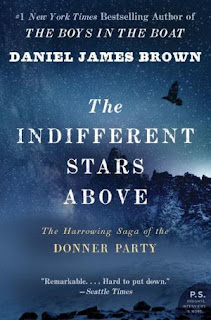
(Image from Barnes & Noble)

Everyone who visits BBB regularly knows I love a gripping, immersive survival story. If it's true? Even better. As we all well know, not everyone in the infamous Donner Party lived to tell the group's grisly tale, but enough did that we have a pretty good idea of what happened that fateful winter in 1847
when they became stranded in the Sierra Nevada Mountains. While cannibalism is what they became known for, there is a lot more to their story. Who were the people in the Donner Party? Where were they headed? How did they lose their way and become perilously trapped in the snow? Why did they resort to eating the flesh of their family members and friends? If you can stomach the more macabre details, theirs is a truly fascinating story. Daniel James Brown tells it well in his engrossing account, The Indifferent Stars Above.

Brown became interested in researching the Donner Party when he discovered he was distantly related to one of its members, a young woman named Sarah Graves Fosdick. She accompanied her parents, her eight younger siblings, and her new husband on the journey from Illinois to California. Brown decided to use her viewpoint to tell the stories of a group of travelers whom he says "deserve better" than to be remembered only as clichéd pioneers who were forced to make a horrible, desperate choice in order to survive an utterly hopeless situation. Brown describes the whole tragedy from beginning to end in a manner that is sensitive, compelling, and illuminating. With all the elements that make for great fiction—an extreme setting, interesting characters, nail-biting tension, and constant conflict of multiple varieties—it's a riveting read. Narrative non-fiction at its best.

Because the story of the Donner Party is about a lot more than just cannibalism, the majority of the book has nothing to do with consuming human flesh. The sections that do address it are—not gonna lie—grisly and nauseating, even though Brown doesn't sensationalize what happened or use overly graphic descriptions. He doesn't need to. The facts are horrifying enough in and of themselves. What really comes through from Brown's account, though, is the humanity of those in the Donner Party. They were ordinary people who faced extraordinary circumstances and had to make agonizing decisions as they slowly went mad from starvation, hypothermia, hopelessness, and despair. As with all books of this kind, The Indifferent Stars Above asks two very pointed questions: What would I do in similar circumstances? How far would I go to save myself and, perhaps more importantly, the people I love? 

Thought-provoking and arresting, this is an excellent read that I recommend highly to anyone who has the stomach for it. I wasn't sure I could get through it, but I'm glad I did. I love inspiring pioneer stories and absorbing survival tales—this is both. 

(Readalikes: Hm, I've read plenty of pioneer survival stories, but I can't think of one that really compares. You?)

Grade:


If this were a movie, it would be rated:


for brief, mild language (no F-bombs), violence, disturbing subject matter, and blood/gore (the chapters on cannibalism are not overly graphic, but they might actually merit an R-rating simply because of what is happening in them)

To the FTC, with love: I bought a copy of The Indifferent Stars Above with a portion of the millions I make from my lucrative career as a book blogger. Ha ha.

Tuesday, October 19, 2021

Top Ten Tuesday: Book Settings That Float My Boat

I'm a little tardy to the TTT party today, but better late than never, right?  Since I'm not a big app user or podcast listener, I'm not really feeling today's topic—Top Ten Online Resources for Book Lovers.  I'm going to skip it in favor of last week's—Favorite Book Settings—which I missed due to being in Europe.  I know I've done topics like this before, so my selections may sound a *little* familiar... 

If you want to join in the TTT fun, click on over to That Artsy Reader Girl for all the details.

Top Ten Favorite Book Settings 


1.  Scotland—I've long loved me a moody, broody Scottish setting.  Now that I've been there, I'm even more interested in reading about this lovely land, the ancestral home of my paternal ancestors.  


2.  Creepy old buildings—Be it a house, a hospital, a hotel, a school, whatever...as long as a book features a spooky edifice (preferably teeming with ghosts), I'm in.


3.  The American South—I enjoy a good Southern yarn, especially when it's filled with quirky characters and Down Home warmth.  There's just something about the South, y'all.


4.  World War II—Although I've stepped back from WWII novels a bit this year, I still find it an endlessly fascinating setting.  


5.  Dystopian/post-apocalyptic—I'm not reading as much in this genre as I have in the past, but I still dig a good end-of-the-world tale.


6.  Small towns—Quaint little villages make the perfect setting for cozy mysteries, psychological thrillers, rom-coms, horror stories, and more.  I especially love a good small-town-with-big-secrets yarn.


7.  Extreme situations/climates—Even though I'm a huge wimp, I enjoy immersing myself in engrossing survival stories, especially when they're set in places with chaotic, unpredictable weather that's going to act up at just the wrong moment.  


8.  Islands—I'm also all about tales set on islands.  The isolation ups the ante for any kind of story, be it a mystery, a psychological thriller, a rom-com, or whatever.


9.  At sea/maritime disasters—While I'm not afraid of water, I still don't love the idea of floating along in the sea with all kinds of dangers—real and imagined—lurking below me.  Because of this, books set at sea, especially survival stories, mysteries, thrillers, and action/adventure tales, always give me a shivery thrill.  Titanic books will 100% always get my attention.


10.  American West/pioneer/homesteading—I've mentioned before that I'm the descendant of both Mormon pioneers and Oregon Trail adventurers.  I grew up hearing their stories, so I've always been fascinated with this time period and setting. 

If you read this blog with any regularity, you're not going to be surprised by any of my answers.  You've seen what I like to read—do you have any suggestions for books I haven't read yet that fit in these categories?  What are your favorite book settings?  I'd love to know.  Leave me a comment on this post and I will gladly return the favor on yours.

Happy TTT!                 

Tuesday, December 08, 2020

Unique MG Historical Eye-Opening and Important

(Image from Barnes & Noble)

With a white father and a Chinese/Korean mother, 14-year-old Hanna has always been different, never quite fitting in among Asians or Caucasians.  She's never stuck out quite as much anywhere as she does in her new town of La Forge in Dakota Territory, though.  Although Hanna tries to show people that she's kind and hard-working, a person just like anyone else, the townspeople can't see past her mixed ethnicity.  When she walks down the street, they stare and whisper.  When she's finally allowed to enroll in school, parents withdraw their children.  When she tries to make friends, she's rebuffed.  All Hanna wants is to become a successful dressmaker like her mother.  Along the way, though, she's desperate to find just one person to be her confidante, one who will accept her for who she is instead of how she looks.  Can Hanna achieve her dreams in a place as unfriendly as La Forge?  Or will she and her father be forced to move on once again?  

Little House on the Prairie was one of my absolute favorite book series growing up.  Laura Ingalls Wilder's descriptions of frontier life were so vivid and captivating that they seemed to tell everything there was to know about homesteading on the prairie.  Turns out, Wilder left out a few things!  With her newest middle-grade novel, Prairie Lotus, veteran children's author Linda Sue Park aims to rectify that.  Like the Little House stories, this one describes pioneer life in rich detail, making it come alive for the reader.  It's told through a different lens, though, one of prejudice and small-mindedness, not just against Asians but against Native Americans as well.  Through smart, brave Hanna we see the courage and resilience that is required not just to do daily battle against these hardships but also to triumph over them.  Prairie Lotus ends on a positive, hopeful note, teaching valuable lessons about empathy, inclusion, and standing up for what's right along the way.  While I didn't end up absolutely loving the novel, I did find it interesting, important, and eye-opening.  


Grade:


If this were a movie, it would be rated:


for violence and scenes of peril

To the FTC, with love:  Another library fine find

Thursday, April 09, 2020

Oregon Trail Adventure/Romance Novel Gives Me All the Feels

(Image from Barnes & Noble)

After a short, disappointing marriage, 20-year-old widow Naomi May is ready to move on with life.  Her restless spirit longs for adventure, which is exactly what she gets when she and her family embark on a journey along the Oregon Trail.  What she doesn't expect is to fall in love.  Even though Naomi knows a match between her and John "Two Feet" Lowry, a half-Pawnee muleskinner, would be considered scandalous even in the wild, wild West, she can't help but be drawn to his quiet strength.  As the two trek along the trail with their company, they experience problems of every kind—illness, inclement weather, theft, broken wagon parts, animal stampedes, contention among the travelers, etc.—but when the worst happens, Naomi's heart is ripped in two.  Abducted by hostile Indians, her baby brother ripped from her arms, she fears she'll never see those she loves again.  Will she ever be reunited with her family?  What about John?  And what about all the happiness and prosperity they were hoping to find in Oregon?  When everything else has been stripped away, where does one find the hope to carry on?

Perhaps it's my own pioneer ancestry or the fact that I grew up along The Oregon Trail, but I love me a good wagon trail story.  Where the Lost Wander (available April 28, 2020) by Amy Harmon certainly fits the bill.  It's an epic, expansive road trip novel that offers adventure, excitement, romance, heartbreak, and joy.  Harmon's vivid prose helped me put myself in my ancestors' place and really feel these characters' emotions—everything from boredom with the monotony of walking the trail to frustration with slow wagons and nasty weather to fear of attack by man and beast to the excitement and wonder of first love and childbirth to the sorrow of loss and grief.  Harmon doesn't romanticize the pioneer experience, but she does capture it in all its glorious triumph and agony. I loved Naomi and John, with their respective family and friends.  While none of them gets an entirely happy ending, our leading lad and lady do receive a satisfying and hopeful one.  If you can't tell, I loved this book, which swept me away, making me laugh, cry, and celebrate the indomitable strength and spirit of my own ancestors, who—like the May Family—risked their lives to find a place of safety and refuge far away, in the West.

(Readalikes:  Reminds me of The Little House on the Prairie series by Laura Ingalls Wilder; Under a Painted Sky by Stacey Lee; Heart's Journey by Kristen McKendry; The Gold Seer trilogy [Walk On Earth a Stranger; Like a River Glorious; and Into the Bright Unknown] by Rae Carson; and The Oregon Trail by Rinker Buck

Grade:

If this were a movie, it would be rated:


for brief, mild language (no F-bombs), violence, blood/gore, and mild sexual content

To the FTC, with love:  I received an e-ARC of Where the Lost Wander from the generous folks at Lake Union Publishing via those at NetGalley in exchange for an honest review.  Thank you!
Saturday, April 06, 2019

African-American Pioneer Novel Grim and Affecting

(Image from Barnes & Noble)

When Rachel—a maid in the Chicago household of a wealthy African-American widow— meets her boss's handsome son, she loses her heart completely.  And possibly her mind.  Rachel will follow the charismatic Isaac DuPree wherever he goes.  When he informs her that he will be moving to the Badlands, where land is practically free for the taking, she agrees to wed him in order to double the amount of property he'll be able to own.  Rachel knows Isaac's passion is for land, not her, and that their marriage is one of convenience only, but she's determined to show him he's chosen the right bride.  As they work the unyielding earth together, raise children in a squalid dugout, and try to eke out a life in a brutal, unwelcoming place where only the most stubborn folks survive, Rachel does her part without complaint.  When the worst comes to pass, however, she must decide what's best for her and her children.  Isaac will never leave the homestead, no matter how bad things get.  Can Rachel find the strength to do what needs to be done?  Or will she lose everything—and everyone—she's ever loved to the unforgiving land and her husband's even more relentless pride?

The Personal History of Rachel DuPree by Ann Weisgarber is a grim, affecting novel that pays tribute to the pioneering spirit that led to the settling of the American West.  The novel shines a special spotlight on the unique experiences of African-American pioneers, who faced prejudice and racism along with all the other hardships that came with colonizing the frontier.  Rachel is the embodiment of those tough, resourceful female settlers who had to use all their courage, ingenuity, and resilience to survive in a harsh, inhospitable landscape.  Her determination and desperation come through loud and clear, making her story intimate, gripping, and memorable.  Despite its bleakness, I enjoyed this evocative historical novel.

(Readalikes:  Reminds me of the Little House on the Prairie books by Laura Ingalls Wilder, These Is My Words by Nancy E. Turner, and Hattie Big Sky by Kirby Larson)

Grade:


If this were a movie, it would be rated:


for brief, mild language (no F-bombs), violence, blood/gore, and disturbing subject matter

To the FTC, with love:  Another library fine find
Tuesday, April 02, 2019

Top Ten Tuesday: They Get Me Every Time

Do you ever find yourself reading the same genre with the same premise/themes over and over and over again?  Do you ever wonder why you like what you like?  I do, too, which is why today's Top Ten Tuesday topic is so fascinating to me:  Top Ten Things That Make Me Immediately Want to Read a Book.  Besides wanting to read new books by favorite authors, there are certain fictional topics and themes that get me every time.  I've actually done this topic a couple times over the years so you can check out this April 2013 post and this one from April 2017 if you're interested in seeing how little my reading preferences have changed!

I'll spill those particular beans in a minute, but first, if you want to join in the Top Ten Tuesday fun (and you really do), click on over to That Artsy Reader Girl.  Read some simple instructions, make your own list, then have a grand ole time visiting other blogs.  It's a great way to find new blogs to love, add good reads to your TBR list, and spread the book blogging love.  Plus, it's FUN.

Okay, here we go with the Top Ten Things That Make Me Immediately Want to Read a Book:


1.  Family Secrets—I'm always intrigued by the tantalizing secrets lurking in the closets of families, especially in those that seem perfect from the outside.  Note:  I enjoy this topic in fiction.  In real life, you can keep your dirty laundry to yourself.  I really don't want to know.  In novels, though, bring it on!

Favorite book(s) in the genre:  Anything by Kate Morton or Joshilyn Jackson


2.  Creepy Old Houses—There's just something about a big, mysterious abode that sets my imagination of fire.  Especially if it's perched atop a rugged cliff near the sea.  The possibilities with this theme are literally endless.  Think hidden passageways, ghosts, secret rooms, forgotten bones, concealed treasures, etc.  Show me a creepy old house on a book's cover or anywhere in its plot summary, and I'll read it.

Favorite book(s) in the genre:  Anything by Kate Morton or Carol Goodman


3.  Homesteading/Pioneers—On the flip side, I also enjoy books about pioneers who leave their creepy old houses to go West in search of land, freedom, and new starts of all kinds.  Something about a character battling inclement weather, poverty, opposing forces, etc. in order to eke out a life in a wild land appeals to me.  Must be my Mormon pioneer heritage that draws me to these kinds of stories.

Favorite book(s) in the genre:  Little House on the Prairie series by Laura Ingalls Wilder, the Gold Seer trilogy by Rae Carson, and Hattie Big Sky by Kirby Larson


4.  World War II—I love historical fiction and this event/time period is one I just can't stop reading about.  No matter how many WWII novels I read, I always want to pick up more.  It's an endlessly fascinating topic and time period.

Favorite book(s) in the genre:  The Nightingale by Kristin Hannah, The Diary of Anne Frank, Those Who Save Us by Jenna Blum


5.  Adoption—Adopting my daughter has been an incredible, life-altering experience.  I'll never not want to read about adoption, whether it's non-fiction guides on various aspects of the process or novels about adoptees searching for their birth families, this topic always reels me in.

Favorite book(s) in the genre:  Anne of Green Gables by L.M. Montgomery, How to Save a Life by Sara Zarr


6.  Amnesia/Traumatic Brain Injury—For some reason, I also find this topic irresistible.  From psychological thrillers to murder mysteries to domestic dramas, I love me an amnesia/TBI novel.

Favorite book(s) in the genre:  What Alice Forgot by Liane Moriarty, Before I Go to Sleep by S.J. Watson


7.  Survival Novels, Especially in Severe Environments of In the Wake of Some Kind of Disaster—As big a wimp as I am, it's kind of surprising that I enjoy these types of books so much, but I do.  Whether they're memoirs or novels, I dig a riveting survival story.

Favorite book(s) in the genre:  Into Thin Air by Jon Krakauer, The Watch That Ends the Night by Allan Wolf, Last Survivors series by Susan Beth Pfeffer


8.  Virus/Disease Outbreaks—Again, I'm not sure why this topic intrigues me so, but it does.  I find outbreak books (both fiction and non-) both horrifying and hard to put down.

Favorite book(s) in the genre:  A Death-Struck Year by Makiia Lucier and Fever 1793 by Laurie Halse Anderson


9.  Hoarding—Having books stashed and stacked in every corner of your house doesn't count as hoarding, right?  Asking for a friend ... I'm always engrossed by books about this condition.  It's fascinating to read about the psychology behind the disease and how people cope with it.

Favorite book(s) in the genre:  Dirty Little Secrets by C.J. Omolulu


10.  Small Towns—Cue Bruce Springsteen.  I was born and raised in a beautiful little town that's not nearly as exciting as most fictional villages.  Still, I love me a small town setting, especially if it's filled with quirky characters, loving (if nosy) neighbors, and some simmering secrets that are about to be uncovered ... Be it quaint, hardscrabble, mysterious, or somewhere in between, a small town setting is always going to get me.

Favorite book(s) in the genre:  the Armand Gamache series by Louise Penny, the Virgin River series by Robyn Carr, and the Big Stone Gap series by Adriana Trigiani

So there you have it, ten themes/genres that I just can't resist.  How about you?  What topics/settings/genres pull you right in?  If you've read any great books that fit into my favorite categories, let me know.  Leave me a comment on this post and I will gladly return the favor.

Happy TTT!       
Friday, September 21, 2018

Light, Funny MG Story Not Without a Lesson or Two

(Image from Barnes & Noble)

Living like a pioneer is not quite what 13-year-old Genevieve Welsh had in mind for her summer break.  Trudging around the prairie in a long dress (and petticoats!), growing her own food, slaving away at chores that can easily be done by machine, living with her family in a tiny, rustic cabin—nothing about Frontier Family History Camp sounds like a vacation at all.  What are her parents thinking?  Living without modern distractions might bring her family closer, but it's also going to make Gen completely insane.

Camp isn't completely awful, especially considering there's a cute boy to practice her flirting skills on.  Still, Gen finds plenty of drama to rant about in the texts she sends to her friends on the forbidden cell phone she snuck into camp.  When Gen's pals turn her messages into a blog and that blog goes viral, attracting national media attention to her plight in the Wyoming wilderness, Gen starts to wonder just what she's done.  Has she managed to ruin what's turning out to be the best worst summer she's ever experienced?

Little Blog on the Prairie, a middle grade novel by Cathleen Davitt Bell, tells a cute, uplifting story about learning to appreciate the simpler things in life.  It's an easy read that's funny, upbeat, and entertaining, albeit totally predictable.  While it feels contrived and far-fetched at times, it's still a fast, fun read that will appeal to anyone looking for a light, laugh-filled story that's not without a lesson or two.  I enjoyed it.

(Readalikes:  Hm, I can't think of anything.  Can you?)

Grade:  


If this were a movie, it would be rated:


for violence and scary images

To the FTC, with love:  Another library fine find
Saturday, February 03, 2018

Little House in the Big Woods a Happy, Nostalgic Re-Read

(Image from Barnes & Noble)

Like legions of girls, I became a rabid Little House on the Prairie fan as a child.  I devoured the books, inhaled the television series, and spent hours imagining what it would be like to live Laura's seemingly-charmed life.  Although I've been meaning to revisit the books as an adult, it's taken me a long time to do it.  I finally picked up Little House in the Big Woods a few months ago and enjoyed the nostalgic re-read.

If you've been living under a rock and you don't already know, Little House in the Big Woods is the first book in Laura Ingalls Wilder's autobiographical series about growing up in Wisconsin during the late 1800s.  Full of fascinating details about homesteading and life on the prairie, the novel doesn't have much of a plot.  It's very episodic, highlighting the Ingalls' experiences with inclement weather, wildlife, farming, family, and eking out a life in the wilds of Middle America.  Overall, it paints a fairly cozy, romantic picture of life in that place and period.  

While I didn't find Little House in the Big Woods quite as engrossing as I did as a child, I still enjoyed it.  There's a reason it's a classic, a reason it's stood the test of time, and that's because it's really very charming.  I still love the story (plot-less, though it may be) and am excited to continue re-reading the series.

(Readalikes:  other books in the series, including Little House on the Prairie; Farmer Boy; On the Banks of Plum Creek; By the Shores of Silver Lake; The Long Winter; Little Town on the Prairie; These Happy Golden Years; and The First Four Years)

Grade:


If this were a movie, it would be rated:


for some scary images

To the FTC, with love:  This is a selection from my personal library.
Friday, June 02, 2017

Book Spotlight: Winds of Change by Jean Holbrook Mathews (With a Giveaway!)

May has been a cray-cray month in my household and I am—once again (always?)—behind on everything there is to be behind on.  Unfortunately, that means I just did not get around to reading Winds of Change, an LDS historical novel by Jean Holbrook Mathews, that I was supposed to review today.  Since I've only read a few chapters of the book, I'm not going to do a review of this one, just a quick spotlight.  If it sounds like a book you'd be interested in reading, don't forget to use the Rafflecopter widget below to enter a giveaway for a copy of the book and a $25 Amazon gift card.

Here goes with the novel's official plot summary:

http://www.blogginboutbooks.com/p/lds-authors.htmlThe year is 1854, and change is in the air throughout India.  Within the walls of her grand home in Calcutta, Sarah McCune anxiously awaits the future.  After eighteen months at war, her husband, a sergeant in the Bengal Army of the East India Company, has made an extraordinary proposal: leave all the comforts of their life in Asia for an unknown future in America.  As recent converts to The Church of Jesus Christ of Latter-day Saints, Sarah and her husband are drawn to the promise of Zion.  So, despite their fears regarding the dangerous voyage before them, they and their four children embark on a journey of faith that will test the limits of their conviction and define generations to come.  This breathtaking saga, based on the historical journals of one Latter-day Saint family, invites readers to experience the sacrifices and perils of these early pioneers as they faithfully seek a land of promise
http://www.blogginboutbooks.com/p/arizona-authors.html
--

If you'd like to read more reviews of Winds of Change, follow along the book's blog tour:


If you'd like to enter to win your own copy of the book as well as an Amazon gift card, enter below:

a Rafflecopter giveaway
Monday, March 06, 2017

Mormon Mentions: Carol Goodman

If you're not sure what a Mormon is, let alone a Mormon Mention, allow me to explain:  My name is Susan and I'm a Mormon (you've seen the commercials, right?).  As a member of  The Church of Jesus Christ of Latter-Day Saints (commonly known as the Mormon or LDS Church), I'm naturally concerned with how my religion is portrayed in the media.  Because this blog is about books, every time I see a reference to Mormonism in a book written by someone who is not a member of my church, I highlight it here.  Then, I offer my opinion—my insider's view—of what the author is saying.  It's my chance to correct misconceptions, expound on principles of the Gospel, and even to laugh at my (sometimes) crazy Mormon culture.

--

Nan Lewis, the main character in River Road by Carol Goodman, teaches creative writing at a college in upstate New York.  At the end of the novel, she's describing pieces written by her students.  She says:

An exchange student wrote a funny, irreverent piece about growing up Mormon in Scotland (270). 

There's not much to this passage, but a few things come to mind:
  • I would totally read a memoir (probably even an irreverent one) about growing up Mormon in Scotland!
  • The LDS Church was introduced in Scotland in the mid-1830s.  Over the next 2o years, almost 10,000 people joined the church.  More than 7,000 emigrated to the United States to join with Mormon pioneers from the U.S. and other countries on the trek to Zion.
  • Although I couldn't find any current statistics for church membership in Scotland alone, there are 186, 423 members in the U.K. (according to MormonNewsroom.org).
Thursday, January 19, 2017

Mormon Mentions: Rae Carson

If you're not sure what a Mormon is, let alone a Mormon Mention, allow me to explain:  My name is Susan and I'm a Mormon (you've seen the commercials, right?).  As a member of  The Church of Jesus Christ of Latter-Day Saints (commonly known as the Mormon or LDS Church), I'm naturally concerned with how my religion is portrayed in the media.  Because this blog is about books, every time I see a reference to Mormonism in a book written by someone who is not a member of my church, I highlight it here.  Then, I offer my opinion—my insider's view—of what the author is saying.  It's my chance to correct misconceptions, expound on principles of the Gospel, and even to laugh at my (sometimes) crazy Mormon culture.

**

Most Western or Western-ish novels mention Mormon pioneers, as they played an indelible part in the settlement of the western United States.  So, it's no big surprise that these iconic travelers make an appearance in Walk on Earth a Stranger by Rae Carson.  

Warning:  The following may be a little spoiler-y.  Proceed with caution!

Toward the end of the novel, Leah and company approach Independence Rock, a large, granite monolith in Wyoming.  Many real travelers carved their names in the rock.  Some of these inscriptions can still be seen today.  While discussing the rock, Jefferson says:

"The Mormons came this way.  And folks going to Oregon.  People have been passing by this rock for a long time." (quote at Location 4077 in e-ARC).

Independence Rock was often mentioned in journals kept by Mormon pioneers.  My own ancestors passed by it.  Although I've never visited the site, I'd love to someday.

*Book cover from Barnes & Noble; Independence Rock image from Wikipedia
Monday, February 29, 2016

Mormon Mentions: Rinker Buck

If you're not sure what a Mormon is, let alone a Mormon Mention, allow me to explain:  My name is Susan and I'm a Mormon (you've seen the commercials, right?).  As a member of  The Church of Jesus Christ of Latter-Day Saints (commonly known as the Mormon or LDS Church), I'm naturally concerned with how my religion is portrayed in the media.  Because this blog is about books, every time I see a reference to Mormonism in a book written by someone who is not a member of my church, I highlight it here.  Then, I offer my opinion—my insider's view—of what the author is saying.  It's my chance to correct misconceptions, expound on principles of the Gospel, and even to laugh at my (sometimes) crazy Mormon culture.
--

In The Oregon Trail, journalist Rinker Buck recounts the trip he took with his brother in 2011 from St. Joseph's, Missouri, to Farewell Bend, Oregon.  As he describes trekking in the footsteps of pioneers in a restored 19th Century covered wagon pulled by a stubborn team of mules, he discusses  
the terrain, the history of the places he passes, and the similarities/differences between his trip and those of the trail's original travelers.  Mormonism is mentioned often in his account because, as Buck notes:
"Reaching the Oregon Trail in Wyoming and not confronting the Mormon experience would be like reaching Paris and not studying the cathedrals.  You cannot understand one without the other" (262).
Addressing everything Buck writes about Mormons would take forever, so I just want to point out a couple passages.  His account of visiting Martin's Cove, a historical site owned by the LDS Church, is hilarious.  He makes some interesting points while telling a hysterical tale about his foul-mouthed brother trying to "put on his Mormon" for the visit.  Buck has his criticisms about how the Church acquired and runs the site, but the brothers' experience there made me laugh 'til I cried.

While Buck's comments about Martin's Cove were not entirely positive, his experience on Rocky Ridge—the highest point of the Mormon Trail and one made sacred because of the extreme hardship endured there by pioneers, especially during the 1856 crossing of the beleaguered Willie Handcart Company—made a believer out of him.  The fortuitous appearance of two "Mormon angels" just when the Buck brothers needed them in order to cross treacherous Rocky Ridge seemed to convince them that indeed, they trod on holy ground.  Of the experience, Buck wrote, "... I loved ... everything Mormon, that day on Rocky Ridge.  Indeed, standing with them on the high rocks, I was a Mormon. Today, on windy Rocky Ridge beneath a hard blue Wyoming sky, I was Mormon" (309).  It's a very touching account, the most memorable part of The Oregon Trail for me.

I haven't ever visited Martin's Cove or Rocky Ridge, but I still have a great respect and love for the pioneers whose blood and tears flowed freely over both.  These men and women—some my own kin—endured incredible hardships in the name of religious freedom.  In obeying the God they believed in with their whole hearts and souls, they blazed trails for all of us to follow.  Vital to the settling of not just Utah, but also much of the American west, the magnificence of their courage and sacrifice really can't be understated.        

(Book image from Barnes & Noble; handcart painting by Brent Flory)
Blog Widget by LinkWithin


Readin'

<i>Readin'</i>
Liberty Street by Heather Marshall

Listenin'

<i>Listenin'</i>
The Accidental Beauty Queen by Teri Wilson



Followin' with Bloglovin'

Follow

Followin' with Feedly

follow us in feedly


Grab my Button!


Blog Design by:


Blog Archive


2026 Goodreads Reading Challenge

2026 Reading Challenge

2026 Reading Challenge
Susan has read 0 books toward her goal of 200 books.
hide

2024 - Elementary/Middle Grade Nonfiction

2024 - Elementary/Middle Grade Nonfiction

2023 - Middle Grade Fiction

2023 - Middle Grade Fiction

2022 - Middle Grade Fiction

2022 - Middle Grade Fiction

2021 - Middle Grade Fiction

2021 - Middle Grade Fiction

2020 - Middle Grade Fiction

2020 - Middle Grade Fiction