



2026 Bookish Books Reading Challenge (hosted by Yours Truly)

2026 Cover Lovers Reading Challenge (hosted by Yours Truly)


2026 Historical Fiction Reading Challenge

2026 POPSUGAR Reading Challenge

Booklist Queen's 2026 Reading Challenge

2026 52 Club Reading Challenge

2026 Craving for Cozies Reading Challenge

2026 Medical Examiner Mystery Reading Challenge

2026 Mount TBR Reading Challenge

2026 Around the Year in 52 Books Reading Challenge
Shelf Reflection Candy Reading Challenge for Kids (and Adults)

2026 Countdown Reading Challenge

Dragon Rambles' Law of Fives Bingo

2026 Southern Literary Reading Challenge

2026 Reading Challenge (by Linz the Bookworm)

2026 Pioneer Book Reading Challenge

European Reading Challenge 2026

2017 Pick Your Poison Reading Challenge (retired challenge - doing old boards for fun)

2026 Reading Challenge Addict Reading Challenge

The 100 Most Common Last Names in the U.S. Reading Challenge

The Life Skills Reading Challenge

Showing posts with label Dystopian Fiction. Show all posts
Showing posts with label Dystopian Fiction. Show all posts
Tuesday, October 19, 2021
Top Ten Tuesday: Book Settings That Float My Boat
I'm a little tardy to the TTT party today, but better late than never, right? Since I'm not a big app user or podcast listener, I'm not really feeling today's topic—Top Ten Online Resources for Book Lovers. I'm going to skip it in favor of last week's—Favorite Book Settings—which I missed due to being in Europe. I know I've done topics like this before, so my selections may sound a *little* familiar...
If you want to join in the TTT fun, click on over to That Artsy Reader Girl for all the details.
Top Ten Favorite Book Settings

1. Scotland—I've long loved me a moody, broody Scottish setting. Now that I've been there, I'm even more interested in reading about this lovely land, the ancestral home of my paternal ancestors.
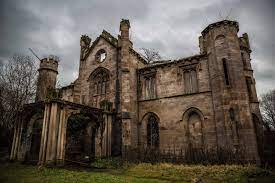
2. Creepy old buildings—Be it a house, a hospital, a hotel, a school, whatever...as long as a book features a spooky edifice (preferably teeming with ghosts), I'm in.
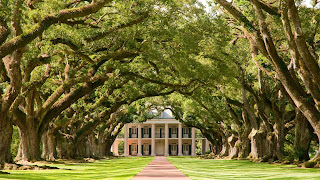
3. The American South—I enjoy a good Southern yarn, especially when it's filled with quirky characters and Down Home warmth. There's just something about the South, y'all.
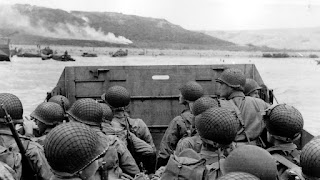
4. World War II—Although I've stepped back from WWII novels a bit this year, I still find it an endlessly fascinating setting.
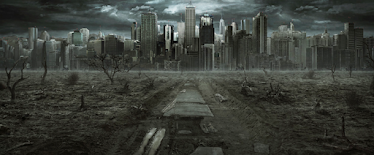
5. Dystopian/post-apocalyptic—I'm not reading as much in this genre as I have in the past, but I still dig a good end-of-the-world tale.
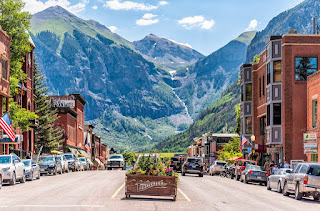
6. Small towns—Quaint little villages make the perfect setting for cozy mysteries, psychological thrillers, rom-coms, horror stories, and more. I especially love a good small-town-with-big-secrets yarn.
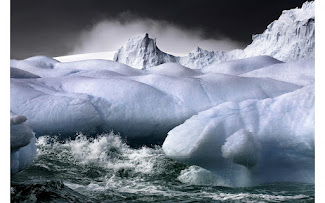
7. Extreme situations/climates—Even though I'm a huge wimp, I enjoy immersing myself in engrossing survival stories, especially when they're set in places with chaotic, unpredictable weather that's going to act up at just the wrong moment.

8. Islands—I'm also all about tales set on islands. The isolation ups the ante for any kind of story, be it a mystery, a psychological thriller, a rom-com, or whatever.
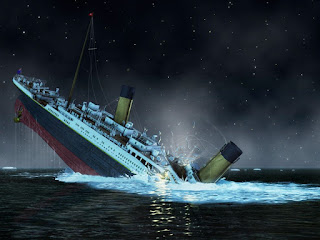
9. At sea/maritime disasters—While I'm not afraid of water, I still don't love the idea of floating along in the sea with all kinds of dangers—real and imagined—lurking below me. Because of this, books set at sea, especially survival stories, mysteries, thrillers, and action/adventure tales, always give me a shivery thrill. Titanic books will 100% always get my attention.
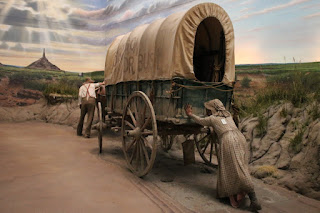
10. American West/pioneer/homesteading—I've mentioned before that I'm the descendant of both Mormon pioneers and Oregon Trail adventurers. I grew up hearing their stories, so I've always been fascinated with this time period and setting.
If you read this blog with any regularity, you're not going to be surprised by any of my answers. You've seen what I like to read—do you have any suggestions for books I haven't read yet that fit in these categories? What are your favorite book settings? I'd love to know. Leave me a comment on this post and I will gladly return the favor on yours.
Happy TTT!
Friday, October 01, 2021
New YA Post-Apocalyptic Novel Not Super Memorable, But Still Entertaining

(Image from Barnes & Noble)
Once upon a time, Paige Miller had big plans for her life. She was going to rock her last year of high school basketball, accept a full-ride athletic scholarship to UConn, then aim for a career in the WNBA. That was before everyone got sick, before she herself fell ill. When she wakes up in her bedroom attached to an IV, Paige realizes she's been in a coma and that everything—not just her world, but the entire world—has changed completely. Not only has her family been wiped out by the lethal flu, but there are few, if any, other people still alive. Life is no longer about basketball. Now it's about survival.
When Paige decides to venture out into the empty world, she's ecstatic to encounter another teenager. Trey Dawson is also an athlete, also alone. Although he has more answers than Paige, neither knows exactly what's going on. As they navigate their way through their strange new reality, they make some shocking discoveries about what's happening and why. Armed with this knowledge, they have a slim chance to save what's left of humanity. Can they succeed against a threat that's much, much worse than a deadly virus?
I enjoyed Rae Carson's Gold Seer trilogy, so I was excited when I learned she had a new book coming out. And a YA post-apocalyptic/dystopian novel at that. Yes, please! Although as it turns out, there's nothing super original or memorable about Any Sign of Life (available October 12, 2021), I still enjoyed the read. It's tense, fast-paced, and exciting. The characters are likable despite not being very complex or fleshed-out. I definitely wanted them to be victorious, even if they didn't quite feel like real live people. While I generally prefer realistic doomsday scenarios, this more sci-fi version still appeals. I assume Any Sign of Life is the beginning of a series and, while I can't say I'm chomping at the bit for the next installment, I'm always here for an entertaining end-of-the-world novel.
Grade:

If this were a movie, it would be rated:

for language (a half dozen or so F-bombs, plus milder expletives), violence, blood/gore, and disturbing subject matter
To the FTC, with love: I received an e-ARC of Any Sign of Life from the generous folks at Greenwillow Books (a division of HarperCollins) via those at NetGalley in exchange for an honest review. Thank you!
Friday, March 19, 2021
Middle-Grade Dystopian/Survival Story Riveting and Thought-Provoking

(Image from Barnes & Noble)
As the sons of an avid survivalist, 13-year-old John Lockwood and his younger brother, Stewart, know how to cope with any doomsday scenario. Not that they'll really need their father's advice about boiling toilet water and using yucca leaves to wash their clothes. After all, Dad has stocked their home with enough supplies to last for two apocalypses. The three of them can ride out any disaster in their isolated desert house, no problem.

Growing up with a Secret Service agent who was obsessed with emergency preparedness, J.L. Esplin was born to write this kind of debut novel. 96 Miles is infused with real survival strategies that will fascinate anyone who's ever wondered what to do in a disaster scenario. These tips add an intriguing element to the story, which is already taut, tense, and compelling. John is a sympathetic character who's brave and resolute, even while he struggles under the pressure of making decisions in a brutal situation where the consequences of every choice can be dire. He's determined to save his brother no matter what the cost, which makes him an appealing, root-worthy hero. Although 96 Miles is a pretty straightforward dystopian/survival novel, there is a story swerve toward the end that caught me by surprise (although it really shouldn't have, considering...) and upped the ante for the boys considerably. With an engrossing plot, likable characters, and skilled storytelling, 96 Miles is a riveting, immersive read. Not only is it entertaining, but it's also thought-provoking, asking intriguing questions like: How would I handle a crisis situation? How would I act as things became increasingly desperate? Would I keep my carefully-stocked supplies to myself or share them with others? What decisions would I be forced to make and would I be able to live with myself afterward? These discussion-worthy themes are just one more element that makes 96 Miles an excellent read.
(Readalikes: Reminds me of Hatchet by Gary Paulsen, Alone by Megan E. Freeman, Dry by Neal Shusterman, and other middle-grade/YA dystopian/survival novels)
Grade:

If this were a movie, it would be rated:

for violence, scary situations, and disturbing subject matter
To the FTC, with love: Another library fine find
Thursday, November 12, 2020
New YA Virus Novel Original and Enjoyable

(Image from Barnes & Noble)
Ever since her mother sought refuge in the remote religious community of Red Creek, 16-year-old Agnes and her siblings have lived within its protective bounds. Agnes is careful to follow all the rules—she keeps her hair bound, her face unpainted, her eyes on the Lord, and her actions in line with the prophet's teachings. She doesn't question the enigmatic leader, even as his preaching becomes increasingly frenetic. Her one rebellion is going against the prophet's law prohibiting medical intervention. Ezekiel, Agnes' 7-year-old brother, is a Type 1 diabetic. Faith hasn't healed him—he needs frequent doses of insulin or he'll die. Agnes won't let that happen. She secretly barters for his medicine with a woman from the outside, even though it means risking punishment and excommunication.
When Agnes' contact brings disturbing news from the outside about a viral pandemic that's sweeping the nation, Agnes is shocked. The prophet is overjoyed that The End is near; his people will wait the apocalypse out in an underground bunker as planned. Agnes refuses. Desperate to save Ezekiel, she leaves behind everything she's ever known and flees with her brother in tow. As they seek safety anywhere they can find it, Agnes realizes that she has a strange, otherworldly connection to the deadly virus. Is it possible that she, an ordinary young woman with little knowledge of the world, has the power to stop it?
While Agnes at the End of the World, a debut novel by Kelly McWilliams, may sound like just another YA dystopian/post-apocalyptic story, it has a few elements that make it stand out. Most cult stories are brutal in their depictions of religious faith, showing it as something that can only be espoused by the blind and the brainwashed. As Agnes' eyes are opened and she begins to question what she's been taught, she grows into a faith that is meaningful in a more personal way. She comes to understand what she, herself, really believes and knows. To me, her journey feels authentic and I love that a YA book depicts that kind of faith as something that is not just acceptable but also healthy and sustaining. Despite its ruminations on religious devotion, never fear—Agnes at the End of the World is not a Christian novel or even a preachy one. Its religious themes are expertly woven into its larger plot. As a Type 1 diabetic myself, I also appreciate the realistic representation of my disease in this story. It's a condition that isn't addressed a lot in novels and definitely should be. Beyond these unique features, Agnes at the End of the World also offers a cast of likable characters, a fast-paced plot, and a story well told in assured prose. For all these reasons, I very much enjoyed this novel, which kept me burning through the pages eager to find out what was going to happen next.
(Readalikes: Reminds me of The Line Between and A Single Light, a duology by Tosca Lee, and The Outside and The Hallowed Ones, a duology by Laura Bickle)
Grade:

If this were a movie, it would be rated:

for language (a handful of F-bombs, plus milder expletives), violence, and scenes of peril
To the FTC, with love: Another library fine find
Saturday, October 17, 2020
Watery Dystopian Action-Packed and Exciting

(Image from Barnes & Noble)
Five hundred years ago, the Great Waves destroyed the known world, burying its gleaming cities under fathoms of water. The rusty ruins beckon to 17-year-old orphan Tempest "Tempe" Alerin, who scavenges them every day hoping to find treasures to sell. She's been scrimping and saving her Notes ever since her older sister, Elysea, drowned two years ago. When she finally has enough currency, she can exchange it for a wondrous gift—scientists will bring her dead sibling back to life for 24 hours. That's all Tempe needs. Five years ago, Elysea caused the death of their parents. Tempe will do anything do find out why.
Reviving the dead is a carefully-controlled process, one that goes awry right from the start. First, Elysea claims she had nothing to do with their parents' deaths. Then, she asserts that they may still be alive. In addition, Elysea doesn't want to spend her 24 hours of life sitting around in a boring research facility. When the sisters find a way to escape their confines, 19-year-old Lor Ritter—the son of the scientist who invented the revival process—is charged with bringing them back. Or else. What ensues is a desperate race against time with Tempe and Elysea hunting for answers, with Lor in hot pursuit. The closer the sisters get to uncovering the secrets of their watery home, the more dangerous their quest gets. Can they find the answers they seek? Or will both of them die trying?
Watery dystopian worlds always fascinate me, so the setting of The Vanishing Deep by Astrid Scholte definitely got my attention. While not everything about the world made sense, it still created an intriguing backdrop for this exciting, action-packed ecological thriller. I liked the characters at the story's center. It was easy to empathize with them and root for their success. As far as plot goes, I saw the Big Reveal coming, but there were other twists that caught me by surprise. The ending was disappointing, which made the novel feel less than satisfying. Overall, then, I didn't love The Vanishing Deep. It did keep me turning pages, though, and I liked it for the most part.
(Readalikes: Reminds me a little of Ship Breaker by Paolo Bacigalupi)
Grade:

If this were a movie, it would be rated:

for language (1 F-bomb, plus milder expletives), violence, and disturbing subject matter
To the FTC, with love: Another library fine find
Friday, September 04, 2020
Dystopian Duology Harrowing But Hopeful

(Image from Barnes & Noble)
Note: While this review will not contain spoilers for A Single Light, it may inadvertently spoil plot surprises from its predecessor, The Line Between. As always, I recommend reading books in a series in order.
After making a desperate trip across the country in the middle of a terrifying pandemic, Wynter Roth is glad to be safely ensconced inside an underground bunker hidden in the Nebraska prairie. The people she loves most—her boyfriend Chase Miller, her 5-year-old niece Truly, and family friends Julie and Lauren—have been protected with her for the last six months. As the weeks wear on, however, things in the bunker have started to unravel. The bunker's inhabitants, including Wynter, can't wait to escape the confines of their underground home, to breathe fresh air, and to return to blessed normality now that the virus has been eradicated.
As the hours tick down until the bunker's automatic unsealing, Julie becomes desperately ill. Wynter needs to get outside and procure an antidote for her friend before it's too late. What she finds outside the bunker, however, shocks her. The world has not righted itself in the last six months. In fact, it's more treacherous than ever before. What happened on the outside while Wynter was sealed inside the bunker? If the virus is still running rampant, how will she save Julie? Once again, Wynter finds herself racing against time, traversing a ruined landscape where danger lurks around every corner. Can she get what she needs in order to save Julie's life? What about the rest of mankind? Can the deadly virus be vanquished or will this be the true end of the world?
The Line Between, the first book in Tosca Lee's dystopian duology, kept me so riveted that I knew I had to read its sequel, A Single Light. While the second book is darker and less original than the first, I still enjoyed it. It boasts plenty of action, introspection, and romance. Despite some tension that crops up between Wynter and Chase in this installment, I adore them as a couple! Reading about them and their plight to save the world definitely kept me engrossed and entertained. These are the only books I've read by Lee, but they've convinced me to keep a close eye on this intriguing author. I'll be very interested to see what she does next.
(Readalikes: The Line Between by Tosca Lee; also reminds me of Agnes at the End of the World by Kelly McWilliams as well as The Hallowed Ones and its sequel, The Outside, by Laura Bickle)
Grade:

If this were a movie, it would be rated:

for brief, mild language (no F-bombs), violence, blood/gore, and disturbing subject matter
To the FTC, with love: Another library fine find
Thursday, September 03, 2020
Exciting Apocalyptic Novel Timely and Affecting

(Image from Barnes & Noble)
After leaving the doomsday cult in which she's been brought up, 22-year-old Wynter Roth is learning how to navigate a strange new world populated with things she's always been taught were evil: television, rock music, skin-bearing clothes, etc. Just as she's beginning to get a handle on things, a strange virus sweeps through the U.S. The disease acts swiftly and causes a terrifying type of early-onset dementia, which leads to confusion, violence, and fear.
Even though Wynter was never a hard-core New Earth believer, she's not entirely surprised to discover the Prophet's revelations about the imminent collapse of society coming true. The End he always raved on about is happening before her eyes. And she's just as helpless as everyone else when it comes to stopping it. Then Wynter's older sister, the Prophet's wife, shows up on Wynter's doorstep. Sick with the virus, she shoves a carrier full of tissue samples into Wynter's hands, begging her to take them to a veterinarian in Colorado. Even though the government is warning people to shelter in place, Wynter knows she has to get the samples to someone who can help eradicate the virus. And she has to do it now.
As Wynter flees Chicago in a desperate race against time, she encounters Chase Miller, an ex-Marine who promises to help her travel across the country. Wynter can't tell him what she has in her possession and Chase is keeping plenty of his own secrets. Can Wynter trust her newfound road trip pal? Can she get the samples to Colorado in time? Can anyone save the population from descending into complete and utter madness?
Although we're in the middle (at the end?) of a global pandemic, I still enjoy reading novels like The Line Between by Tosca Lee. After all, disaster/survival scenarios are way more fun to contemplate in fiction than to experience in real life! I've read loads of these kinds of books and, honestly, The Line Between doesn't bring anything super unique to the table. And yet, it's one of the most memorable apocalyptic novels I've read in some time. Why? Well, it features likable characters, an exciting plot, a timely premise, and solid writing. What's different about it is that it's cleaner and more uplifting than most books of its ilk. Yes, it deals with difficult, disturbing subjects. However, it does so in a way that is thoughtful and faith-promoting without being cheesy or preachy. While The Line Between is technically a Christian novel, it doesn't feel like one. It does ruminate on religious subjects, which—as a person of faith—I found both refreshing and thought-provoking. Statements like this one stayed with me long after I finished the book: "It occurs to me that none of us should have entered these walls. That we have never been 'in but not of the world' here but in another world completely. That this was never faith, but seclusion in a place so safe that faith need never be tested even as we lived our lives of duality" (388). This element of the story may turn non-religious readers off, but I hope it doesn't because The Line Between really is an engrossing, affecting read. I loved it.
(Readalikes: its sequel, A Single Light by Tosca Lee; also reminds me of Agnes at the End of the World by Kelly McWilliams and The Hallowed Ones and its sequel, The Outside, by Laura Bickle)
Grade:

If this were a movie, it would be rated:

for brief, mild language (no F-bombs), violence, blood/gore, non-graphic references to disturbing subject matter (rape, sexual abuse, forced marriage, etc.), and scenes of peril
To the FTC, with love: I bought a copy of The Line Between from Changing Hands Bookstore with a portion of the millions I make from my lucrative career as a book blogger. Ha ha.
Friday, July 03, 2020
Drought Dystopian a Tense, Exciting, Thirst-Making Read

(Image from Barnes & Noble)
"Doomsday scenarios are only fun when doomsday is just a hypothetical" (163).
The drought is old news to Californians. They're already allowing their grass to die, not filling up their swimming pools, and jumping in and out of the shower as fast as possible. Although they've been warned the water will run out eventually, most are shocked—and woefully unprepared—when the worst happens. With no water gushing or even trickling out of their taps, people are panicking. Those who aren't rushing to leave the state are ransacking the grocery stores, buying up every bottle of water on the shelves. When not even an ice cube is left and days continue to pass with no relief in sight, chaos reigns.
Alyssa Morrow barely recognizes her neighborhood anymore—her once peaceful subdivision has turned into a war zone. When her parents don't return from their trip to get help, the 16-year-old realizes she's on her own to take care of herself and her 10-year-old brother. With no stored water in her home, her only hope lies in the weird kid who lives next door. Kelton McCracken is the geeky son of a prepper. If anyone knows how to survive the water apocalypse, it's him. When a shocking tragedy sends the teens on a frantic flight to find the supplies they need to survive, all of their lives are put on the line. Desperate to keep her brother safe and healthy, Alyssa must make some impossible decisions as the ordered world she once knew falls apart around her.
Considering all that's happened already in 2020, Dry—the newest YA novel by Neal Shusterman and his son, Jarrod—rings eerily true. Luckily, the catastrophic drought at the center of the story is only fiction (at least for now). As such, it makes for a tense, exciting page-turner that will force readers to ask themselves, "What would I do?" The answers may be unsettling, especially considering all we've all been through this year. Besides being an engrossing novel, Dry is definitely a thought-provoking one. The characters are realistically complex and conflicted; on the whole, though, they're a likable and admirable lot. Interesting characters, an engaging plot, and plenty of food for thought combine to make Dry not just a riveting read, but a powerful one. I absolutely recommend picking yourself up a copy. Just be warned: you're going to want to have a big glass of ice water next to you while you read this book because I guarantee it's going to make you crave a nice, cold drink!
(Readalikes: Reminds me of other YA dystopian novels, especially Not a Drop to Drink by Mindy McGinnis)
Grade:

If this were a movie, it would be rated:

for language (no F-bombs), violence, blood/gore, and disturbing subject matter
To the FTC, with love: I bought a copy of Dry from Amazon with a portion of the millions I make from my lucrative career as a book blogger. Ha ha.
Thursday, May 14, 2020
Slow, Introspective Dystopian Novel a Bit of a Slog

(Image from Barnes & Noble)
With floodwaters rising steadily over the last 100 years, the world has dwindled to a string of small colonies perched on the mountain peaks that used to soar far above civilization. Oceans of dark, impenetrable water are all around, forcing many to live solely on the water, stepping on land rarely and only to gather news and supplies. Ever since the floods swallowed what was left of Nebraska, Myra has lived on a 15-foot long, 5-foot wide boat with her 7-year-old daughter, Pearl. Although her life is focused mainly on keeping Pearl fed and out of danger, Myra has another purpose guiding her actions. She's desperate to find her older daughter, Row, who was stolen from Myra by her husband seven years ago.
Just when Myra is giving up hope of ever finding Row, a stranger claims to have spotted her in a remote Arctic Circle colony. Is it true? Even if it is, can Myra really make the long, arduous journey to such a far-flung spot? Regardless, she has to try. But such an undertaking will require getting help from strangers and she stopped trusting other human beings long ago. Desperate, she throws her lot in with a group of pilgrims looking for the perfect place to create a utopian society. Even in a bigger ship, with a crew of people who seem trustworthy, Myra feels anxious. Can she keep herself and Pearl safe all the way to the Arctic Circle? What if Row isn't there? With the trip becoming more dangerous with each mile, Myra has to decide what is more important—keeping Pearl safe or finding Row—because the farther she travels, the more apparent it's becoming that she can't do both ...
Of all the dystopian worlds I've encountered in books and movies, I'm most creeped out by the watery ones. There's just something about the fathoms below ... With its unsettling setting and sad, introspective vibe, After the Flood, a debut novel by Kassandra Montag, is a haunting read in more ways than one. It's not a page-turner by any means; in fact, there are only occasional spurts of action. This made the story a bit of a slog for me. I also had a little trouble with the characters. I found them an interesting lot, but they were written in a way that felt removed, which made it tough to connect with them. Nevertheless, I found Montag's prose assured, the world she created fascinating, and her heroine intriguing. I finished the book because I wanted to know what was going to happen to Myra and her daughters. In the end, though, After the Flood turned out to be just an okay read for me. Bummer.
(Readalikes: Hm, I can't think of anything. You?)
Grade:

If this were a movie, it would be rated:

for language, violence, sexual content, blood/gore, and disturbing subject matter
To the FTC, with love: I received a finished copy of After the Flood from the generous folks at William Morrow (an imprint of HarperCollins). Thank you!
Thursday, December 19, 2019
Popular YA Dystopian Novel Nothing We Haven't Seen Before, But Still Compelling

(Image from Barnes & Noble)
"We shouldn't be here. This place isn't ours anymore" (59).
Eighteen months ago, a mysterious and vicious plague struck the island off the coast of Maine that houses the Raxter School for Girls. The pestilence descended without mercy, killing some teachers and students outright and changing others into something almost ... inhuman. Now quarantined, surviving only on supplies delivered in infrequent shipments from the U.S. Navy, the remaining girls have gone feral. Polite society is a distant memory—now they'll fight to the death over an apple core.
The island's wildlife has changed just as much as its human occupants have, making the grounds unpredictable and dangerous. Safety lies in numbers. Protection, at least from outside forces, can only be found inside Raxter's fortified walls. So, when Byatt Winsor disappears, her friends are frantic to find her. Hetty Chapin won't stop until she brings her BFF home, even if it means venturing outside the fence, braving whatever horrors are hiding in the jungle. As tough as Hetty has become, even she will be shaken by what she finds in the bush. Her discoveries will change everything she thinks she knows about Raxter, the Tox, and the unthinkably desperate situation that has somehow become her normal, everyday life.
While dystopian novels aren't quite as popular as they once were, I still dig them. Something about average Joe's and Jane's struggling to survive in a changed world, wrestling with their humanity as they make impossible choices, just appeals to me. These storylines always leave me asking myself, "What would I do in their situation? How far would I go to protect myself and my loved ones?" This kind of honest self-reflection can be eye-opening to say the least. Beyond that, I'm always up for an exciting page-turner, so, you know, win-win.
Even though Wilder Girls, a debut novel by Rory Power, doesn't offer anything dystopian lovers haven't seen before, it does provide a compelling plot that will have readers asking themselves the kinds of questions described above. The story gets a little confusing and while some questions are answered along the way, there are a lot of loose endings left flapping in the wind. A cliffhanger at the end suggests a sequel will be forthcoming, although I haven't seen confirmation of that anywhere. While some reviewers felt Wilder Girls moved too slowly, I found it thoroughly engrossing. I burned through the pages fast and furiously to see what would happen next in this grim dystopian world. Since so many questions were left unanswered, I can't say I was totally satisfied with Wilder Girls. Still, it kept me entertained and I will absolutely read the sequel that Power better be penning!
(Readalikes: I haven't actually read the William Golding classic, but Wilder Girls has been called a "feminist Lord of the Flies.")
Grade:

If this were a movie, it would be rated:

for language (a dozen or so F-bombs, plus milder expletives), violence, blood/gore, and disturbing subject matter
To the FTC, with love: Another library fine find
Monday, November 25, 2019
New YA Dystopian Novel Fast-Paced and Exciting

(Image from Barnes & Noble)
Dr. Doomsday knew the apocalypse was coming. Until the massive cyberterrorism attacks actually happened, though, his obsession with the end of the world just looked like paranoid delusion. His constant prepping and drilling, not to mention the ranting and raving, led to the soiling of his reputation, the end of his marriage, and estrangement from his children. Now that the country is in chaos, the world as she's known it crumbling to dust, his 17-year-old daughter, Susan "Jinx" Marshall, is asking (along with the rest of the nation), "Did Dr. Doomsday want the apocalypse to happen so badly that he caused it himself?"
 The authorities seem to think the man behind the attacks is not Jinx's father, Dr. Max Marshall (aka Dr. Doomsday), but her stepdad, Jay Novac, who works in security at one of the banks that was targeted. When a particularly menacing cop takes both Jay and Jinx's mother into custody, Jinx's mom urges her to run and find her father. This isn't an easy task on a normal day. It's even tougher with the police hot on her trail and two siblings—one a young diabetic, the other a know-it-all stepsister—in tow. Channeling all the prepper rules her father drilled into her, Jinx must use every skill in her arsenal, no matter how desperate, to ensure the survival of herself, her family, and the world at large.
Day Zero by Kelly deVos, is an exciting, fast-moving dystopian novel that will delight fans of the genre. Although it doesn't really bring anything new to the table, it still entertains with a twisty plot, interesting characters, and strong, active prose. It starts with a bang (literally) and keeps moving at a frantic pace that will keep readers flying through its pages. Since the book is set in Arizona, it was especially fun to read about familiar places, although I was a little sad when the characters' plan to head for Snowflake was abandoned since that's my family's zombie apocalypse getaway destination! The book's get-in-trouble-then-get-rescued cycle does get a bit redundant, but overall, I enjoyed this compelling novel. While Day Zero's ending is satisfying, it also left me wanting to know what happens next—needless to say, I'm looking forward to the book's sequel, Day One, which comes out in 2020.
(Readalikes: Reminds me of After the Lights Go Out by Lili Wilkinson and other YA post-apocalyptic/dystopian novels)
Grade:

If this were a movie, it would be rated:

for language (a handful of F-bombs, plus milder expletives), violence, and blood/gore
To the FTC, with love: I received an e-ARC of Day Zero from the generous folks at Inkyard Press (an imprint of Harlequin) in exchange for an honest review. Thank you!
Thursday, November 14, 2019
Hard-to-Find Australian Doomsday Novel Tense, Gritty

(Image from Book Depository)
"I don't know who I am now the world is different" (261).
In the last three years, Rick Palmer has gone from a relatively normal father to a paranoid doomsday prepper. After his wife took off, he poured his energy into educating himself and his three teenage daughters on how to survive the apocalypse he claims is imminent. He drilled his kids on how to find water in the desert, how to conserve resources, how to set bones and perform emergency first aid, and most of all, how to slip out of their house and into their well-stocked bunker without giving away the secret of its existence. Despite these frantic exercises, life in the Palmers' tiny Australian town is perfectly peaceful, even boring. Prudence Palmer and her sisters are convinced their father is mad as the proverbial hatter. They long for a normal, on-the-grid life full of the luxuries the other teens in town take for granted—smartphones, dates, regular school, parents who aren't off their rockers ...
Then, the lights go out in the Palmers' small village. Communication with the outside world is cut off. Confusion and chaos quickly replace order and reason. With Rick missing—he hasn't returned from the distant mine where he works—it's up to Pru to decide the best way to keep herself and her sisters safe. She knows she should retreat to the bunker immediately, but a chance meet-up with a handsome boy visiting from America, whose parent is also missing, gives her pause. As fear and desperation settle over their once-peaceful town, Pru must ask herself some important questions. Does she do what her father taught her and hoard her resources or defy his wishes and aid her helpless neighbors? What kind of person is she really, when push comes to shove?
I don't read as many dystopian/post-apocalyptic novels as I once did, but I still enjoy them when I do. After the Lights Go Out by Lili Wilkinson was mentioned on some best-of-the-genre list, so I knew I wanted to read it. It's not an easy book to get a hold of, though; luckily, Book Depository came through for me. While there's nothing really original about After the Lights Go Out, it's still a tense, engrossing novel. It's atmospheric, gritty, and compelling. The plot moves quickly, the characters are intriguing, and the decisions Pru has to make throughout the story makes it a thought-provoking tale. Like all books of this kind, it made me ask myself, "What would I do in this situation?" It's an interesting thought. All in all, then, I enjoyed this one, even if it's nothing I hadn't seen before.
(Readalikes: Reminds me of the Tomorrow, When the War Began series by John Marsden and lots of other dystopian/post-apocalyptic novels)
Grade:

If this were a movie, it would be rated:

for language, violence, and sexual content
To the FTC, with love: I bought a copy of After the Lights Go Out from Book Depository with a portion of the millions I make from my lucrative career as a book blogger. Ha ha.
Saturday, August 31, 2019
Contemplative Post-Apocalyptic Novel Absorbing, Thought-Provoking

(Image from Barnes & Noble)
"It was as if the building itself had drawn us to it from the most far-flung corners of the world. And when we arrived, the world had ended" (143).
In Switzerland for an academic conference, Jon Keller—a history professor at Stanford—is staying at L'Hôtel Sixième. Featuring 1000 rooms, breathtaking views, and a fading elegance, the isolated resort sprawls on acres of lovely country land in the middle of nowhere. This becomes a problem when frantic news reports announce that nuclear bombs have fallen on major cities in both Europe and the U.S. Panicked guests stampede to the door, speeding toward the nearest airport and train station. With no transportation left, Jon and a handful of others become stranded at the hotel. As news stations and the Internet shut down, they're left with zero information, no viable means of escape, and little hope for survival.
Two months after the disaster strikes, Jon is one of 20 or so people still living in the hotel. Some have since wandered off or committed suicide; those who remain eke out a semblance of a life, trying to stave off the boredom and cabin fever that rules their lives. With supplies dwindling, the guests also must figure out how to find more food, protect themselves against roving bands of desperate survivors, and whether or not it's time to move on from what has been a relatively safe haven. While these conflicts plague the hotel community, another problem arises—the body of a young girl is discovered in one of the building's water tanks. Horrified, Jon vows to find out what happened to her. The situation at the resort is bad enough without having a cold-blooded murderer among them. As their patchwork society crumbles around them, Jon and his comrades search for the killer among them while battling to hold on to not just their sanity but their very humanity.
The Last by Hanna Jameson is an intriguing genre mash-up that combines a compelling murder mystery with a tense dystopian/post-apocalyptic survival tale. It's not a pulse-pounding thriller, but more of a contemplative study of human nature. Which isn't to say it's boring. It's not. In fact, it's an engrossing novel that asks some interesting questions about right and wrong, self-interest vs. community, what truly matters when the world has gone to hell, and what makes us human. While I didn't end up loving The Last, I did find it an absorbing, thought-provoking read.
(Readalikes: Reminds me of Station Eleven by Emily St. John Mandel)
Grade:

If this were a movie, it would be rated:

for language, violence, blood/gore, depictions of illegal drug use, sexual content, and disturbing subject matter
To the FTC, with love: I bought a copy of The Last from Barnes & Noble with a portion of the millions I make from my lucrative career as a book blogger. Ha ha.
Friday, April 27, 2018
Exciting and Original, Alternate History Zombie Novel an Engrossing Read

(Image from Barnes & Noble)
The War Between the States was in full-swing when the country got the shock of its young life—its dead soldiers were not remaining dead. They were rising up, hungry and rabid. With shamblers turning everyone in their paths, war was derailed and desperate Americans had to learn to fight the growing zombie menace. An enterprising government came up with a brilliant solution. To create an army of monster-slayers, it passed the Native and Negro Reeducation Act, which required every Native and Negro child to attend combat school starting at 12 years old. While certain cities have since been declared shambler-free, these "throwaway" children still have plenty of fighting to do in order to keep their betters from being bitten.
 At 17, Jane McKeene is in her third year at Miss Preston's School of Combat for Negro Girls in Baltimore. Despite being the daughter of one of the wealthiest white women in Haller County, Kentucky, Jane's mixed-race ethnicity destines her for a life of servitude. Although her fondest desire is to return home to check on her family—from whom she has heard nothing—she's making the best of her situation. She's training to be an Attendant, a combination chaperone/bodyguard for rich white girls. While such a career will hardly give her the freedom she craves, it beats harvesting cotton or slaving away in a hot kitchen. Besides, she's a skilled fighter. If she can just manage to keep her mouth shut and her manners in check long enough, a secure future will be hers.
When local families start to vanish, Jane's skeptical of the official "shambler attack" explanation. Something else is going on, something much more disturbing. Not one for leaving well enough alone, she launches her own investigation into the strange disappearances. Before she knows it, she's embroiled in a plan more sinister than she ever could have imagined. With her bright future, not to mention her very life, on the line, she has to escape and find her way back to Kentucky. The shamblers aren't the only monsters Jane encounters as she fights for survival in a grim, violent world that considers her—and others like her—very much expendable.
I've been dying to read Dread Nation, a debut novel by Justina Ireland, ever since I heard about it. I was thrilled, then, when I won a copy of it from YA author Mindy McGinnis (if you like book giveaways, you have to check out her blog). The story gripped me from the very first page with its intriguing blend of horror, adventure, alternate history, and humor. Jane's impossible not to like. She's tough and sassy, but also compassionate and loyal. It's easy to root for her as she struggles to make her way in a grisly world where her life is valued only for its sacrificial power. With plenty of action to keep readers turning pages, Dread Nation is an entertaining novel so engrossing you almost don't recognize its allegorical nature. Ireland definitely has some messages—about race, about individual worth, about the value of all life—that she's trying to get across. And she succeeds without breaking the story's stride in the least. In short, I loved this book. I can't wait to see what happens next to the intrepid Jane McKeene.
(Readalikes: Reminds me of the Ashes trilogy [Ashes; Shadows; Monsters] by Ilsa J. Bick)
Grade:

If this were a movie, it would be rated:

for language (no F-bombs), blood/gore, violence, and sexual innuendo
To the FTC, with love: I won an ARC of Dread Nation from the always generous Mindy McGinnis. Thank you!
Subscribe to:
Posts
(Atom)


Readin'

Beach Thriller by Jamie Day

Listenin'

Hidden Rooms by Kate Michaelson



Followin' with Feedly


-
-
-
-
Sweet Spot by Kemper Donovan4 hours ago
-


Grab my Button!


Blog Design by:



2026 Goodreads Reading Challenge

2024 - Elementary/Middle Grade Nonfiction

2023 - Middle Grade Fiction

2022 - Middle Grade Fiction

2021 - Middle Grade Fiction

2020 - Middle Grade Fiction
