Search This Blog

2026 Bookish Books Reading Challenge (hosted by Yours Truly)

My Progress:


27 / 30 books. 90% done!

2026 Cover Lovers Reading Challenge (hosted by Yours Truly)

2026 Cover Lovers Reading Challenge (hosted by Yours Truly)

My Progress:


39 / 50 books. 78% done!

2026 Literary Escapes Challenge

- Alabama
- Alaska (1)
- Arizona
- Arkansas (1)
- California (7)
- Colorado (1)
- Connecticut (1)
- Delaware
- Florida
- Georgia (1)
- Hawaii (1)
- Idaho (1)
- Illinois (2)
- Indiana (1)
- Iowa (1)
- Kansas
- Kentucky (1)
- Louisiana (2)
- Maine (4)
- Maryland (1)
- Massachusetts (2)
- Michigan (2)
- Minnesota (2)
- Mississippi (1)
- Missouri
- Montana (1)
- Nebraska (1)
- Nevada
- New Hampshire
- New Jersey (1)
- New Mexico
- New York (4)
- North Carolina (2)
- North Dakota
- Ohio (3)
- Oklahoma
- Oregon (2)
- Pennsylvania (1)
- Rhode Island (1)
- South Carolina
- South Dakota (1)
- Tennessee
- Texas (3)
- Utah (1)
- Vermont (1)
- Virginia (1)
- Washington (1)
- West Virginia
- Wisconsin (2)
- Wyoming
- Washington, D.C.*

International:

- Australia (6)
- Austria (1)
- Canada (2)
- England (21)
- Fiji (1)
- France (1)
- Ireland (2)
- Italy (1)
- Mexico (1)
- New Zealand (1)
- Norway (1)
- Scotland (1)
- The Bahamas (1)
- Vatican City (1)

My Progress:


34 / 51 states. 67% done!

2026 Historical Fiction Reading Challenge

My Progress:


24 / 25 books. 96% done!

2026 POPSUGAR Reading Challenge

My Progress:


29 / 50 books. 58% done!

Booklist Queen's 2026 Reading Challenge

My Progress:


38 / 52 books. 73% done!

2026 52 Club Reading Challenge

My Progress:


34 / 52 books. 65% done!

2026 Build Your Library Reading Challenge

My Progress:


22 / 40 books. 55% done!

2026 Craving for Cozies Reading Challenge

My Progress:


24 / 51 books. 47% done!

2026 Medical Examiner Mystery Reading Challenge

2026 Mount TBR Reading Challenge

My Progress


19 / 25 books. 76% done!

2026 Around the Year in 52 Books Reading Challenge

My Progress


44 / 52 books. 85% done!

Shelf Reflection Candy Reading Challenge for Kids (and Adults)

My Progress:


54 / 65 books. 83% done!

2026 Countdown Reading Challenge

My Progress:


55 / 55 books. 100% done!

2026 Series Reading Challenge


23 / 36 books. 64% done!

Dragon Rambles' Law of Fives Bingo

Dragon Rambles' Law of Fives Bingo

My Progress:


70 / 125 books. 56% done!

2026 Southern Literary Reading Challenge

My Progress:


9 / 9 books. 100% done!

2026 Reading Challenge (by Linz the Bookworm)

My Progress:


36 / 60 books. 60% done!

2026 Pioneer Book Reading Challenge

2026 Pioneer Book Reading Challenge

My Progress:


10 / 40 books. 25% done!

European Reading Challenge 2026

My Progress:


7 / 50 books. 14% done!

2017 Pick Your Poison Reading Challenge (retired challenge - doing old boards for fun)

My Progress:


67 / 125 books. 54% done!

2026 Reading Challenge Addict Reading Challenge

My Progress:


4 / 5 challenges. 80% done!

The 100 Most Common Last Names in the U.S. Reading Challenge

My Progress:


98 / 100 names. 98% done!

The Life Skills Reading Challenge

My Progress:


76 / 80 skills. 95% done!
Showing posts with label World War II. Show all posts
Friday, November 08, 2024

A Perfect Pairing: The Enigma Girls and The Bletchley Riddle


(Image from Britannica.com)

I'd never heard of Bletchley Park until I saw that one of my favorite historical fiction writers, Ruta Sepetys, was coming out with a new novel entitled The Bletchley Riddle. A little Googling revealed that Bletchley Park is a country house in Buckinghamshire, England, that was purchased by a British government agent for use as a code-breaking center during World War II. The work that was done there was top secret, accomplished by mostly young people, and has been credited with shortening the war by 2-4 years. So, what specifically went on there?

Now that the mysteries of Bletchley Park have been declassified, the public can read all about it. Even though I haven't been a child for *ahem* quite some time, I particularly enjoyed learning about the Park from two books written for middle grade readers that came out this year—The Enigma Girls: How Ten Teenagers Broke Ciphers, Kept Secrets, and Helped Win World War II by Candace Fleming and the aforementioned The Bletchley Riddle by Ruta Sepetys and Steve Sheinkin. They make perfect companion reads. I read Fleming's non-fiction account first, which gave me a great basic understanding of the Park. Having that foundation enhanced my enjoyment of the novel, which tells an exciting fictional story about two siblings who work there.

(Image from Barnes & Noble)

The Enigma Girls provides a thorough, very readable account of what Bletchley Park was, the work that went on inside its walls, what that work entailed, who performed the jobs, how their work impacted the war, and, most fascinating to me, how it affected them on a personal level. I was especially amazed that so many of the Park's workers were young (most were under 21) and female. The fact that these young ladies answered the call of their government to leave their homes for an unknown period of time to live in an unknown place and to perform unknown "war work" duties that they were absolutely forbidden to talk about—even with other workers at the Park—is astounding, really. As the book's subtitle indicates, Fleming focuses on ten specific workers, which gives the text a close-up, intimate feel.

A lot of the code breaking that went on involved using complicated machinery and tedious deciphering methods. Fleming explains these in detail, which does get a little dull and overwhelming at points. Other than that, though, The Enigma Girls is an excellent read. It's interesting, conversational, and inspiring. I highly recommend it for anyone, middle grader or not, who's interested in learning more about this lesser known aspect of World War II.

Grade:


If this were a movie, it would be rated:


for war violence

(Image from Barnes & Noble)

The Bletchley Riddle begins with a splash. Not literally, but it does involve a plucky 14-year-old giving her chaperone the slip and escaping the ship that is supposed to take her to safety in America. Lizzie Novis has no interest in leaving England, no matter how dangerous the war gets. She has too much to do. Her mother, an American who was working for the U.S. Embassy in London, disappeared 9 months ago while on a trip to Poland. Although she is presumed dead, Lizzie refuses to believe it. She has tried to enlist her brother's help in finding their only parent, but he has repeatedly told her to drop it. Just when he's decided to stop communicating with her, she finds an important clue that she hopes will entice him into helping her investigate. 

When Lizzie goes in search of her brother, she discovers even more secrets. A math student at Cambridge, 19-year-old Jakob is now doing a top secret war job in the countryside that he can't talk about. Since he can't leave his sister on her own, he has no choice but to take her with him to Bletchley Park, where she becomes a messenger at the mysterious facility. As Lizzie puzzles out what is going on at her hush-hush new workplace, she enlists the help of new friends to figure out what really happened to her mother. The more they dig, the more disturbing and risky their investigation becomes. What was Willa Novis really doing in Poland? Could rumors that she was a traitor to the Allies possibly be true? What is happening behind all the closed doors at Bletchley Park? Can the efforts of an ordinary teenage girl truly make a difference in such a vicious, overwhelming war? Lizzie is about to find out.

The Bletchley Riddle is fiction, written to entertain more than educate, so it's no surprise that it moves a lot faster than The Enigma Girls. With short, snappy chapters filled with action and intrigue, it tells a compelling and engrossing story. Although it goes over a lot of the technical details that were discussed in The Enigma Girls, Sepetys and Sheinkin explain them in a shorter, simpler way that never bogs down the plot. In fact, the tale focuses more on the mystery of Willa's disappearance than the goings-on at Bletchley Park, blending the most exciting aspects of both to keep the novel rocking along. 

I love the characters in this novel, especially feisty, outspoken Lizzie. Jakob, Colin, and Marion are perfect foils for her with their calmer, more grounded personalities. Combining their various talents, they make an appealing, well-balanced team.

Along with an interesting Bletchley Park backdrop; an intriguing, exciting plot; and warm, likeable characters; Sepetys and Sheinkin add in dashes of humor and romance along with a plot twist or two to round out this enjoyable novel. What results is a solid, satisfying read that educates and entertains at the same time. I loved it.

Grade:


If this were a movie, it would be rated:


for brief, mild language (no F-bombs) and violence

If you enjoy learning about code-breaking and lesser-known aspects of World War II, you should dig both of these excellent reads. Each is worth the read on its own, but they complement each other so well that you really should try them both to get a complete picture of all the intrigue and intent focus that once defined Bletchley Park. 

Wednesday, February 21, 2024

Sharon Cameron's Newest YA Historical Another Glittering Gem

(Image from Barnes & Noble)

Growing up in her family's art gallery surrounded by bohemian creatives has given 18-year-old Isa de Smit a colorful, open-minded view of the world. Amsterdam has always felt alive for her, bursting with beauty and vibrancy. All of that is being leached out by the Nazis who have invaded The Netherlands, crowding her hometown with their bland khaki uniforms and narrow-minded ideals. The city has become a tense, dangerous place for everyone. It's wisest to stay far under the Nazis' radar, but Isa is out of money to buy food, let alone purchase new painting supplies for her reclusive artist father or pay the taxes needed to keep their gallery home. Out of options, she decides to take an enormous risk: sell one of her father's brilliant Old Masters forgeries to Hitler's personal art agent. 

That successful transaction earns her the attention of Michel Lange, a Nazi soldier who claims he longs to desert. He'll help her sell more forgeries if she'll use her connections with the Resistance to get him safe passage to Switzerland. Isa needs his cooperation in order to raise funds to help her best friend smuggle Jewish babies out of Amsterdam. Does she dare trust a Nazi? Does she really have a choice? As Isa's plans get more daring, her every movement becomes increasingly scrutinized, her life growing more dangerous by the hour. Can she accomplish her purposes without getting caught by her deadly foe? Or being informed on by her "friends?" Will the counterfeit paintings pass muster? Or will Isa be the next to face a Nazi firing squad? Desperate to save as many babies as she can, she has to take the risk, no matter the consequences. Even if it means sacrificing her own life, which it just might...

I'm a huge Sharon Cameron fan, so it's no surprise that I loved Artifice. Bluebird is still my favorite of the author's novels, but this one—her newest—has many of the same elements that made Bluebird such a winner for me. To begin with, it features complex, interesting characters. Isa is especially easy to root for. She's wholly sympathetic, but she's also brave, compassionate, determined, and devoted to the people and the country she loves. Plotwise, Artifice starts off a bit slowly. It gains momentum as it goes, though, and quickly turns into a tense, engrossing read that kept me racing through its pages until after one in the morning. I couldn't put it down because I had so much concern for Isa, her friends, and what was going to happen to them all. Cameron always makes me care! It's true that I found the whole subject of art a little off-putting since I know nothing about that world. Most of the references to specific artists and paintings went right over my ignorant head and I found Isa's constant references to color a tad annoying. Still, I enjoyed learning about how paintings are forged, especially in relation to its collection by the Nazis. I'd never read a book on the subject before and it really is fascinating. All things considered, I very much enjoyed this beautiful, moving book, another gem from Cameron. Even if you're not an art lover, I recommend Artifice to anyone who enjoys absorbing historical fiction.

(Readalikes: Reminds me of YA historical fiction by Ruta Sepetys, Monica Hesse, Julie Berry, etc.)

Grade:


If this were a movie, it would be rated:


for brief, mild language (no F-bombs); violence; blood/gore; and disturbing subject matter

To the FTC, with love: I received an e-ARC of Artifice from the generous folks at Scholastic Press via those at NetGalley in exchange for an honest review. Thank you!

Friday, January 06, 2023

Green's Newest WWII Novel Uplifting and Edifying

(Image from Barnes & Noble)

When Avis Montgomery's older brother goes off to war, he makes her promise to keep open the small, private library where he is head librarian. Avis is shocked by the charge. Not only is she a married woman (even with lots of women entering the workforce while all the men are away, it's still scandalous for a wife to labor outside the home), but she doesn't even like to read! Surely, Anthony has chosen the wrong person to replace him.

Anthony hasn't been gone long when Louise Cavendish, the steely heiress who owns the library, decides the place needs to be turned into something more useful. Desperate not to let her brother down, Avis invents a reason to keep the library open on the fly: she's started a town book club that needs to use library resources. Since she's actually done no such thing, she must pull off the impossible in a short amount of time—with Louise's narrowed eyes watching her every move. Gathering every warm body she can find, reader or not, Avis launches her tentative book club. Suddenly she is forced to start reading the novels she's always eschewed while also learning how to lead a club that is somehow becoming an essential part of her small Maine community.

The book club brings together Martina Bianchini, a single mother who works at the munitions factory to make ends meet and lives in fear of her estranged husband; Ginny Atkins, a spitfire who will do anything (including recruiting book club members) to earn the money she needs to buy back the land the Navy appropriated from her family on her beloved Long Island; Freddy Keats, a handsome one-eyed war vet with a mysterious past; and Louise, who watches the proceedings with a critical eye, determined to shut down the library despite Avis's efforts to keep it running. As the members meet regularly, what started as a wartime diversion becomes an important lifeline during a time of worry and upheaval. What will happen to the little group if Louise shuts it down? How will any of them survive the war without the one thing that's keeping them all sane?

As soon as I heard about The Blackout Book Club, Amy Lynn Green's newest offering, I knew I wanted to read it. The novel appealed on so many levels: an interesting World War II setting, bookish themes, and an author whose writing I admire. Since I really enjoyed Green's last effort (The Lines Between Us), I went into this one with high exprectations. Probably too high, because I didn't end up loving The Blackout Book Club quite as much as I wanted to. Still, I liked it overall. It's a gentle novel that is clean, uplifting, and heartwarming. That makes it sound like a cheesy inspirational read, which it's not. What it is is a good, wholesome book that's engaging and well-written. Our quartet of women narrators are all sympathetic and likable, with some being more memorable than others. My favorite is Ginny, who's got a whole lot of heart to go along with her spunky, fun-loving personality. Green's prose is warm and skilled. Plotwise, the novel gets a little slow at times, but there was enough going on to keep me reading. So, while The Blackout Book Club didn't blow my socks off, I still found it to be a pleasurable read that is touching, entertaining, and edifying. 

Note: Amy Lynn Green is a writer of Christian fiction. Although The Blackout Book Club technically falls into this genre, it's really not a religious book. There are references to church attendance, wearing a crucifix, and praying, but the mentions are brief. What I'm trying to say is, if you're not a fan of preachy religious fiction, you have no reason to worry!

(Readalikes: Reminds me of Jennifer Ryan's World War II novels, especially The Kitchen Front)

Grade:


If this were a movie, it would be rated:


for violence and scenes of peril

To the FTC, with love: I received a copy of The Blackout Book Club from the generous folks at Bethany House Publishers in exchange for an honest review. Thank you!

Saturday, October 15, 2022

Sophomore Effort Not As Satisfying As Debut
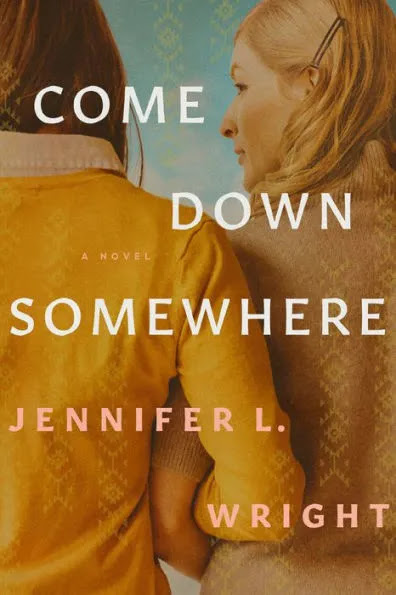
(Image from Barnes & Noble)

Although she knows war is raging in foreign lands, 15-year-old Olive Alexander never thought it would really reach her. She thought she was safe on the isolated ranch in New Mexico's Jornado del Muerto desert, where her family has lived for generations. Then, her beloved older brother enlisted. And now, the Army has claimed 75% of the Alexanders' land for a top-secret military project. Olive's seen the posters—everyone must do their part for the war effort—she just never thought her part would include leaving her home. Especially without her mother, who has to stay behind to work the portion of the ranch that still belongs to the Alexanders.

Olive's not happy about moving to Alamogordo to live with her grandmother. She's not happy that her mother isn't coming along. And she's really not happy about being forced to go to public school, when she's always been taught at home. Olive's Alamogordo classmates either ignore her or make fun of her, except for one—Jo Hawthorne, who's also new to the school. Sure, she's a pious Jesus freak, but at least she's nice. There's only one problem. Jo's father is the Army sergeant who's taken over Olive's ranch. The two can't possibly be friends. Except they do form an unlikely bond. Then, one day, the sky explodes, Jo disappears, and the girls never see each other again.

Seven years later, Jo is back in Alamogordo. Changed by her years away, she has returned to demand answers from her estranged father. What really happened on the day of the explosion? What was he actually doing out in the desert? And where is Olive? Jo won't stop digging until she has the answers.

I loved Jennifer L. Wright's debut novel, If It Rains, so I was thrilled when I discovered she had a new book coming out. Come Down Somewhere, her sophomore effort, revolves around a homefront World War II event that I'd never heard of before. Bonus. I dig historical novels that highlight interesting but forgotten incidents. The book is more about the characters than anything, though, and both Olive and Jo are likable and sympathetic, even if they're not particularly unique or memorable. Their relationship definitely needed more development; it didn't feel strong enough to send a grown-up Jo on such a determined quest to figure out what happened to a childhood friend. Even though I didn't feel super connected to either of the girls, I did become invested in their story. Plot-wise, the novel kind of crawls along, with most of the action happening at the end of the novel. Although it defintiely drags in places, I found the story compelling enough to keep reading. The Big Reveal wasn't a huge surprise; it wasn't super obvious either. All these things considered, I didn't enjoy Come Down Somewhere nearly as much as I did If It Rains, which is disappointing. Still, I liked it for the most part. I do think Wright is a talent to watch, so I'll be keeping en eye out for her next book.

Wright's books are Christian novels, which are always hit-or-miss for me. As a religious person, I appreciate stories that are uplifting and faith-promoting. If they get cheesy or heavy-handed? I'm out. Unfortunately, Come Down Somewhere tilts a little too much in the preachy direction, which gets annoying at times. I prefer subtle lessons. Nevertheless, I give Wright props for writing clean, hopeful, God-positive books.  

(Readalikes: Wright's books remind me of those by Amy Lynn Green and Jocelyn Green.)

Grade:


If this were a movie, it would be rated:


for violence and disturbing subject matter

To the FTC, with love: I bought a copy of Come Down Somewhere with a portion of the millions I make from my lucrative career as a book blogger. Ha ha.

Saturday, May 21, 2022

Much-Hyped The London House Severely Underwhelming

(Image from Barnes & Noble)

Caroline Payne is surprised—and thrilled—when a handsome friend from college whom she hasn't seen in years shows up unexpectedly at her workplace. She is shocked—and dismayed—when she discovers why. Mat Hammond, an adjunct history professor who researches genealogical mysteries on the side, has honed in on Caroline's family. He's investigating Caroline's great-aunt, a British woman who he says ran off with a Nazi officer during the war, disgracing her family and betraying her country. A well-known magazine is already showing interest in what could be a shocking, sensational story. Caroline's convinced he has the wrong person. Her great-aunt, her namesake, died of polio as a child. When Mat shows her compelling proof, Caroline doesn't know what to think. If there's any truth to the matter, she knows such a public airing of dirty family laundry would finish off her already cancer-ridden father. She can't let that happen.

Begging Mat for time to launch her own investigation, Caroline flies to her father's ancestral home in London. There, she finds a collection of letters and diaries that are sure to hold the truth, whatever it may be. With Mat by her side, Caroline delves into the past, getting to know her Aunt Caro and her grandmother—Caro's twin, Margaret—in ways she never has before. The more intimately acquainted Caroline becomes with her great-aunt, the more she fears what she'll find out about her. She doesn't want her namesake to be who Mat claims she is, no matter how damning the evidence she's examining with her own eyes. What happened to Caro? Who was she, really? Caroline has to know. Whatever the truth, she must protect her family, even if it costs her a promising future with the irresistible historian/journalist who wields the power to destroy it. 

I've seen nothing but rave reviews for The London House, Katherine Reay's newest novel. Considering all the glowing praise, I couldn't wait to dig into this book that was surely going to blow my socks off. It was quite a disappointment, then, when my socks stayed firmly on my feet throughout! The London House isn't a horrible read. In fact, it's got some elements I always appreciate: an intriguing people-in-the-present-digging-into-the-past premise; charactors who are mostly sympathetic and likable; a clean story, with no graphic language, violence, or sex; and a straightfoward narration that makes the book a fast, easy read. Unfortunately, it also has some issues that drove me batty. For one thing, the story is just...not too exciting. The characters are nice and all, but they're also not very complex or interesting. Even Caro, the center of the tale, doesn't manage to come alive on the page. Part of the problem is that the letters and diary entries through which we get to know her are not just dull but also distancing. Further, although there are two couples falling in love in the novel, there are no sparks between any of them. Where's the love? To complicate matters even further, there's not much action in the book, so it's not exactly a page-turner. It's also fairly obvious from the start how Caro's story is going to end. I kept waiting for some surprise twists to up the suspense and tension; it never happened. As a result of these annoyances, I found The London House severely underwhelming. I definitely wanted something more gripping, more intimate, more exciting, and more interesting. As is? Meh.

(Readalikes: Reminds me of other ho-hum World War II novels, but no specific titles are coming to mind.  You?)

Grade:


If this were a movie, it would be rated:


for violence

To the FTC, with love: Another library fine find

Thursday, April 28, 2022

Despite Explosive Subject Matter, The Atomic City Girls is a Slow, Lackluster Slog

(Image from Barnes & Noble)

After her fiancé is killed in the war, 18-year-old June Walker is at loose ends. Wanting to do her bit to help her country, she joins her older sister in Oak Ridge, Tennessee, where a crowd of young women are descending to work at mysterious jobs they're not allowed to talk about. The bustling town—which has suddenly sprung up out of nowhere—is dominated by secrecy and security. Inside its borders, though, Oak Ridge is lively with people bustling in and out of factories, canteens, bowling alleys, movie theaters, and dance halls. June's job as an operator of a big, boring machine is mind-numbingly dull, but her life is more meaningful now than it's ever been. Even though she's not allowed to ask questions about what she's actually doing, she's convinced her role in Oak Ridge—not just as a worker but also as a morale booster for all the young men stationed there—is important.  

Dr. Sam Cantor, a 30-year-old engineer from New York, is charmed by June's country girl naiveté. Sam is one of the few people in Oak Ridge who knows what The Manhattan Project is. As his frowned-upon relationship with the younger woman blooms, it becomes increasingly difficult to keep the secrets he's promised to protect from leakng out. 

Cici Roberts, June's bombshell roommate, is disgusted by the growing closeness between June and Sam, even though she spends her every waking hour trying to snag a rich husband for herself. Desperate to pass as a sophisticated socialite instead of what she truly is, Cici will do anything to keep her own secrets hidden.

Joe Brewer knows that he and his fellow Negro workers are not treated the same as their white counterparts in Oak Ridge. Still, he needs his wages to send back to his wife and children in Alabama. That requires working hard and keeping his head down, keeping far away from the trouble that's brewing in the colored quarters.  

When Hiroshima is bombed and the shocking truth about the true purpose of Oak Ridge is revealed, everyone in the secret city will be left to grapple with their own morality in the wake of the horrifying destruction they've helped to bring about. The lives of June, Sam, Cici, and Joe will be forever changed because of it. 

I've never read anything about The Manhattan Project, so I thought The Atomic City Girls by Janet Beard would be an interesting read. And it is, at least in the sense that it gives readers an idea of what Oak Ridge, Tennessee, was and what living there must have been like. Enhanced with historical photographs from the the city's heyday, the book's setting definitely comes alive. Beyond that, though, it is...not exciting. The novel has no plot, which makes it an episodic slog that meanders here and there without really going anywhere. Although I like that the author uses different focus characters to show different aspects of life in Oak Ridge, the four Beard has created are either bland or downright unpalatable. June and Joe fall into the first category, with Sam and Cici in the other. June and Joe are both sympathetic and kind, but they're cardboard cutouts with no real personality or depth. Sam is a broody jerk who takes advantage of a vulnerable young woman for his own lustful desires. Cici is a self-centered snob who only cares about tricking a wealthy man into taking care of her. Ugh. I was rooting for June and Joe (even though neither felt at all real to me), but I despised both Sam and Cici. Beard's simplistic, lackluster prose does not help matters, combining with the novel's other problems to make it even less appealing. Considering all this, you may be asking, "So, why on earth did you keep reading The Atomic City Girls?" Honestly, I'm not sure. It fulfilled a few reading challenge prompts and it's a fast, mindless read. In the end, though, I found it almost wholly unsatisfying. It's boring, depressing, and just meh all around. 

(Readalikes: I've heard that The Girls of Atomic City: The Untold Story of the Women Who Helped Win World War II by Denise Kiernan is a much better book on the same subject.)

Grade:


If this were a movie, it would be rated:


 or possibly R
for language (no F-bombs), violence, and sexual content

To the FTC, with love: I bought a copy of The Atomic City Girls with a portion of the millions I make from my lucrative career as a book blogger. Ha ha. 

Tuesday, March 22, 2022

Top Ten Tuesday: A World War II TBR List


As much as I love descriptive words, I'm just not feeling the TTT topic du jour—Top Ten Books With An Adjective in the Title. Instead, I'm going to swerve way off today's path and talk about something totally different. In sorting through all the many books on my shelves, trying to decide which to keep and which to donate in anticipation of my upcoming move, I've realized that I have quite a lot of books on one particular subject. Because of the state of the world in recent years, I've actually kind of avoided reading about it, so now I have quite the stockpile of books to read about...drumroll, please...World War II! Surprised? I doubt it. BBB regulars know I'm fascinated by this historical period. So, today, I'm going to list ten-ish (although I probably could have done 30) books about World War II that I want to read sometime soon.

If you're feeling list-y today, join in the TTT fun. Click on over to That Artsy Reader Girl for all the details.

Top Ten World War II Books I Want to Read  
- in no particular order -


1. The Warsaw Orphan by Kelly Rimmer—Although Elzbieta Rabinek is careful to keep her true identity hidden, she's still wary of the German soldiers who have taken over her hometown. As their vengeance against her Jewish neighbors heightens, she watches with increasing fear and anger. When she befriends a nurse living in her building, Elzbieta's careful existence quickly turns into one ripe with danger and risk. Is saving the lives of Jewish children worth losing her own?

Rimmer's The Things We Cannot Say, which is set in the same year (1942) as The Warsaw Orphan but takes place in Russia, is also one I want to read.


2. Sisters of Night and Fog by Erika Robuck—This novel tells the tale of two women from different circumstances, both of whom have risked everything to work against the Nazi regime, whose stories converge in the Ravensbrück concentration camp.

Robuck's The Invisible Woman also sounds intriguing.


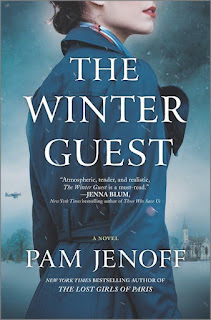
3. The Winter Guest by Pam Jenoff—Helena and Ruth are sisters in war-torn Poland. As they struggle to care for their three younger sisters, they make a decision that puts all of their lives in danger. While helping a wounded American paratrooper is the right thing to do, it has dangerous unforeseen consequences for all of them.

I've read and loved a couple of Jenoff's World War II novels, but there are still a bunch on her backlist that I want to read.


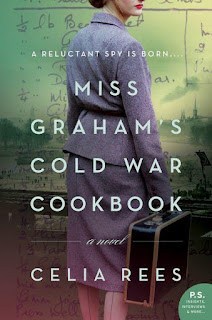
4. Miss Graham's Cold War Cookbook by Celia Rees—Now that World War II has finally ended, Britain has created the Control Commission for Germany. The organization hires British civilians to help rebuild the country and investigate war crimes. Bored with her provincial life, Edith Graham applies for a job with the commission, but soon finds herself acting as a spy for the Secret Service. While she's found the excitement she's been missing, it may just cost her her life.


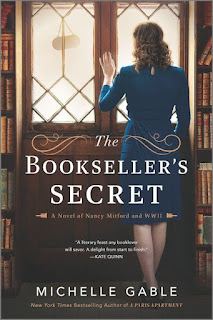
5. The Bookseller's Secret by Michelle Gable—Based on the wartime experiences of real-life literary icon Nancy Mitford, this novel concerns a woman adrift who eagerly takes on the challenge of running a London bookstore while its owner is away. 


6. 81 Days Below Zero: The Incredible Survival Story of a World War II Pilot in Alaska's Frozen Wilderness by Brian Murphy—I always enjoy survival stories and this one sounds especially intriguing. It tells the true story of a routine flight gone horribly wrong. When their plane crashes, four Army aviators are killed, while one—a man from Philadelphia with no wilderness experience—is left alone in the freezing Yukon to wait for rescue. Or death.


7. The Night Train to Berlin by Melanie Hudson—As war rages all around them, Alex and Eliza meet by chance. The RAF pilot turned war correspondent and the war artist make a solemn vow to meet in Berlin once peace has finally been declared. Will their newly found love triumph in a time when nothing at all is certain?

Hudson's The Last Letter From Juliet, about a female World War II pilot, is also on my TBR list.


8. Everyone Brave is Forgiven by Chris Cleave—Although I'm not a fan of love triangles, this epic wartime romance sounds compelling. It features three people whose lives converge in an extraordinary time. As the war rages on, they'll experience friendship, love, devastation, sorrow, and triumph. 


9. The London House by Katherine Reay—Caroline Payne is shocked when a historian friend uncovers a scandalous secret about her British great-aunt. Can the woman really have betrayed her family and her country by running to Germany to marry her Nazi lover? Caroline can't believe it. Desperate to clear her great-aunt's name, Caroline travels to her family's ancestral home in London to learn the truth.


10. The Betrayal of Anne Frank: A Cold Case Investigation by Rosemary Sullivan—Everyone knows the tragic story of Anne Frank and her family, but one question about their fate has never been answered: Who betrayed their whereabouts to the Nazis? Retired FBI agent Vincent Pankoke became obsessed with finding the answer. With the use of new technology, Pankoke and his team of cold case investigators pored over numerous documents and conducted scores of interviews, all of which led them to a shocking conclusion.

I eat up World War II books, but I know not everyone loves them for various and sundry reasons. What's your take? Do you love them? Loathe them? Which are your favorites? Have you read any of the ones I mentioned? What did you think? I'd truly love to know. Leave me a comment on this post and I'll gladly return the favor on your blog.

Happy TTT!

Thursday, February 17, 2022

A War Novel That's Heartwarming and Uplifting? Yes, Please!
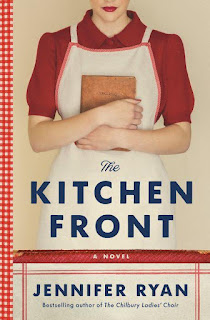
(Image from Barnes & Noble)

As World War II rages on, life in the English countryside has been irrevocably changed. Threatening planes streak through the sky, devastating telegrams keep arriving on doorsteps, and home cooks scrabble to put together decent meals from the meager pickings they can forage from the forest and village. While residents strive to keep their chins up, it's getting more and more difficult by the day. 

Things perk up for four women when they learn a popular BBC radio program will be hosting a cooking contest in their area. The winner will be rewarded with a coveted spot as The Kitchen Front's first female co-host. Snagging first place will be life-changing. For Audrey Landon, a grieving war widow with three young sons, it would mean keeping a roof over her children's heads (however leaky it may be). Lady Gwendoline Strickland doesn't need the prize money, but she would love to laud a victory over her sister, who was always their mother's favorite. A young kitchen maid, Nell Brown dreams of being free from working for a family she despises. Zelda Dupont, a trained restaurant chef, craves the validation winning would give her in a competitive profession that's filled with condescending men. With each member of the quartet fiercely determined to come out on top, the contest quickly becomes a tense affair that some of them would do anything (even cheat) to win. Audrey, Gwendoline, Nell, and Zelda all have struggles and secrets the others don't know about. As their defenses are slowly chipped away and a fragile friendship forms between them, the contest starts to become something wholly different. Which one of them will emerge victorious? And how will the experience change all of their lives?

War books cannot usually be described as uplifting or heartwarming and, yet, that is exactly how I would characterize The Kitchen Front by Jennifer Ryan. The story also features heartache, sorrow, and struggle, but overall, it's about unity, friendship, and the power of a loving support network in helping one learn to stand on her own two feet. Audrey, Gwendoline, Nell, and Zelda are all likable characters, whose challenges make them sympathetic and relatable. Although their story has a predictable end, I didn't care a smidge. I enjoyed every word of this charming, empowering novel. Because it highlights recipes for delicacies like The Ministry of Food's Sheep's Head Roll and Zelda's Raised Spam and Game Pie, The Kitchen Front—unlike most novels I read that are centered around food—did not make me salivate. It did, however, give me new appreciation for WWII cooks who had to use their own resourcefulness and ingenuity just to turn their meager rations into something at all edible! 

(Readalikes: Reminds me of other books by Jennifer Ryan)

Grade:

If this were a movie, it would be rated:

for brief, mild language (no F-bombs), violence, and mild sexual content

To the FTC, with love: I bought a copy of The Kitchen Front from Changing Hands Bookstore with a portion of the millions I make from my lucrative career as a book blogger. Ha ha.

Friday, December 03, 2021

World War II Homefront Mystery a Compelling, Thought-Provoking Read
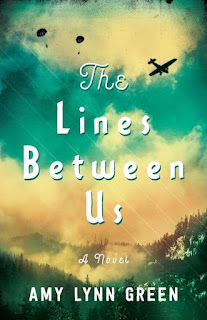
(Image from Barnes & Noble)

When Gordon Hooper meets Dorie Armitage—the sister of his college buddy, Jack—he's instantly smitten. She's got a zest for life that is hugely appealing to his more sedate self. Before their romance makes it farther than a few flirty letters, Pearl Harbor is bombed, pulling the U.S. into war. As a Quaker, Gordon refuses to fight. Dorie is outraged at his cowardice and even more enraged that Gordon has convinced Jack to be a conscientious objector as well. She refuses to speak to either one of them ever again.

Three years later, Gordon and Jack have been assigned by the Civil Public Service (CPS) to work as smokejumpers in an Oregon forest. Although not everyone is happy about their presence, mostly the pacifists are left alone to do their jobs. As a member of the Women's Army Corps (WAC), Dorie also faces her share of prejudice. Still, she loves doing her part for the war effort by working as a mechanic at Fort Lawton, volunteering at a nearby hospital, and being a charming date for lonely, homesick soldiers-in-training. 

When Jack is badly burned in a suspicious wildfire, Gordon is devastated. And angry. He knows there's more to the story than his superiors are letting on. When he shares the awful news in a letter to Dorie, he never expects her to reply let alone show up at his strike camp on a phony Army assignment. Together, the two form a tense, secret partnership to find out what really happened to Jack. What they uncover shocks them both. With the fate of the nation hanging in the balance, they must examine the deepest parts of their hearts and souls as they decide what to do with a very dangerous secret.

I've been seeing nothing but rave reviews for The Lines Between Us by Amy Lynn Green, so I was thrilled when Bethany House sent me a copy of the book for review. I've read a lot of World War II novels, but only a few that take place entirely within the U.S. The Lines Between Us offers up a new perspective on what it was like for American soldiers who were given non-combatant assignments, whether by choice or not. Through Gordon, Jack, and Dorie, Green examines the roles and ideals of conscientious objectors versus those of a gung-ho soldier who's proud to fight for her country, even though her gender prevents her from serving on the front lines. This contrast provides plenty of tension and conflict to keep the story interesting, while also giving the reader some intriguing food for thought. Beyond that, The Lines Between Us is also a compelling mystery that brings to light a piece of WWII history I knew nothing about. The novel's characters are a likable bunch, whose flaws make them relatable, while allowing all to grow throughout the tale. Surprisingly, given that the book starts with a budding romance, the love stories here are subtle and not a major part of the tale. This is a Christian novel, so faith plays a central role. Still, the book never gets overly preachy or cheesy. In fact, characters are shown wrestling with the tenants of their various religions, struggling to understand what is right when their convictions are being challenged on every side. This questioning makes the characters both believable and relatable, while also prompting readers to ask themselves what they would do in a similar situation. For all these reasons and more, I very much enjoyed The Lines Between Us. I'm going to recommend it to my book club because it's a clean, interesting, well-written novel that is brimming with discussion-worthy material. You better believe I'm also going to be checking out the author's previous book as well as everything she writes in future.

(Readalikes:  Reminds me of Promise to Return by Elizabeth Byler Younts)

Grade:


If this were a movie, it would be rated:


for violence and scenes of peril

To the FTC, with love: I received a print copy of The Lines Between Us from the generous folks at Bethany House in exchange for an honest review. Thank you!

Friday, November 05, 2021

Gripping World War II Verse Novel Perfect for Reluctant Readers
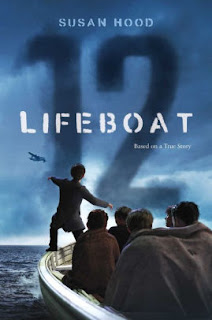
(Image from Barnes & Noble)

I've read a lot of books about World War II—a lot—and I don't remember ever hearing of the S.S. City of Benares before picking up Lifeboat 12 by Susan Hood. This middle-grade verse novel tells the true story of 13-year-old Ken Sparks, who gained a coveted spot on the ocean liner, which was taking young war evacuees away from the bombing in London and delivering them to safe homes in Canada. At first, he and the other kids are having the time of their lives feasting on lobster and caviar, playing with piles of new toys, and exploring their posh floating digs. Just as they've been declared safe from the possibility of being torpedoed by the Germans, however, the City of Benares sustains a direct hit. Soon, Ken finds himself floating in the middle of the North Atlantic on a small lifeboat with 6 other boys, 5 British sailors, 32 Lascars (Asian sailors), 1 businessman, 1 priest, 1 female escort, and few supplies. As the days pass with no sign of rescue, things become increasingly desperate on Lifeboat 12. Who will live and who will die in the desperate fight for survival that ensues?

Ken's story is tense and gripping, interspersed with passages that illustrate the utter boredom of sitting in a boat waiting for rescue day after day after day. The verse format gives the tale an appealing you-are-there immediacy that makes it even more impactful. Lifeboat 12's passengers are sympathetic folks, people for whom you can't help but root. For those of us whose favorite part of a historical novel is the author's notes at the end, Lifeboat 12 has a wealth of backmatter that includes photos, an interview with Ken Sparks, and a factual recounting of the real-life event. All of these elements combine to create an exciting, compelling story that is perfect for reluctant readers as well as anyone who enjoys a gripping survival tale, especially those based on a true story.

(Readalikes: Reminds me of the Titanic series by Gordon Korman, the I Survived series by Lauren Tarshis, and books by Alan Gratz

Grade:


If this were a movie, it would be rated:


for violence, scary images, and scenes of peril

To the FTC, with love: Another library fine find

Tuesday, October 19, 2021

Top Ten Tuesday: Book Settings That Float My Boat

I'm a little tardy to the TTT party today, but better late than never, right?  Since I'm not a big app user or podcast listener, I'm not really feeling today's topic—Top Ten Online Resources for Book Lovers.  I'm going to skip it in favor of last week's—Favorite Book Settings—which I missed due to being in Europe.  I know I've done topics like this before, so my selections may sound a *little* familiar... 

If you want to join in the TTT fun, click on over to That Artsy Reader Girl for all the details.

Top Ten Favorite Book Settings 


1.  Scotland—I've long loved me a moody, broody Scottish setting.  Now that I've been there, I'm even more interested in reading about this lovely land, the ancestral home of my paternal ancestors.  


2.  Creepy old buildings—Be it a house, a hospital, a hotel, a school, whatever...as long as a book features a spooky edifice (preferably teeming with ghosts), I'm in.


3.  The American South—I enjoy a good Southern yarn, especially when it's filled with quirky characters and Down Home warmth.  There's just something about the South, y'all.


4.  World War II—Although I've stepped back from WWII novels a bit this year, I still find it an endlessly fascinating setting.  


5.  Dystopian/post-apocalyptic—I'm not reading as much in this genre as I have in the past, but I still dig a good end-of-the-world tale.


6.  Small towns—Quaint little villages make the perfect setting for cozy mysteries, psychological thrillers, rom-coms, horror stories, and more.  I especially love a good small-town-with-big-secrets yarn.


7.  Extreme situations/climates—Even though I'm a huge wimp, I enjoy immersing myself in engrossing survival stories, especially when they're set in places with chaotic, unpredictable weather that's going to act up at just the wrong moment.  


8.  Islands—I'm also all about tales set on islands.  The isolation ups the ante for any kind of story, be it a mystery, a psychological thriller, a rom-com, or whatever.


9.  At sea/maritime disasters—While I'm not afraid of water, I still don't love the idea of floating along in the sea with all kinds of dangers—real and imagined—lurking below me.  Because of this, books set at sea, especially survival stories, mysteries, thrillers, and action/adventure tales, always give me a shivery thrill.  Titanic books will 100% always get my attention.


10.  American West/pioneer/homesteading—I've mentioned before that I'm the descendant of both Mormon pioneers and Oregon Trail adventurers.  I grew up hearing their stories, so I've always been fascinated with this time period and setting. 

If you read this blog with any regularity, you're not going to be surprised by any of my answers.  You've seen what I like to read—do you have any suggestions for books I haven't read yet that fit in these categories?  What are your favorite book settings?  I'd love to know.  Leave me a comment on this post and I will gladly return the favor on yours.

Happy TTT!                 

Blog Widget by LinkWithin


Readin'

<i>Readin'</i>
Beach Thriller by Jamie Day

Listenin'

<i>Listenin'</i>
Hidden Rooms by Kate Michaelson


Followin' with Bloglovin'

Follow

Followin' with Feedly

follow us in feedly


Grab my Button!


Blog Design by:


Blog Archive


2026 Goodreads Reading Challenge

2026 Reading Challenge

2026 Reading Challenge
Susan has read 0 books toward her goal of 200 books.
hide

2024 - Elementary/Middle Grade Nonfiction

2024 - Elementary/Middle Grade Nonfiction

2023 - Middle Grade Fiction

2023 - Middle Grade Fiction

2022 - Middle Grade Fiction

2022 - Middle Grade Fiction

2021 - Middle Grade Fiction

2021 - Middle Grade Fiction

2020 - Middle Grade Fiction

2020 - Middle Grade Fiction