



2026 Bookish Books Reading Challenge (hosted by Yours Truly)

2026 Cover Lovers Reading Challenge (hosted by Yours Truly)


2026 Historical Fiction Reading Challenge

2026 POPSUGAR Reading Challenge

Booklist Queen's 2026 Reading Challenge

2026 52 Club Reading Challenge

2026 Craving for Cozies Reading Challenge

2026 Medical Examiner Mystery Reading Challenge

2026 Mount TBR Reading Challenge

2026 Around the Year in 52 Books Reading Challenge

Shelf Reflection Candy Reading Challenge for Kids (and Adults)

2026 Countdown Reading Challenge

Dragon Rambles' Law of Fives Bingo

2026 Southern Literary Reading Challenge

2026 Reading Challenge (by Linz the Bookworm)

2026 Pioneer Book Reading Challenge

European Reading Challenge 2026

2017 Pick Your Poison Reading Challenge (retired challenge - doing old boards for fun)

2026 Reading Challenge Addict Reading Challenge

The 100 Most Common Last Names in the U.S. Reading Challenge

The Life Skills Reading Challenge

Blog Tour and Giveaway: The Swans of Harlem (Young Readers' Edition) by Karen Valby
%20cover.jpg)
At the peak of the civil rights movement, Lydia Abarca was the first ballerina in a Black ballet company to grace the cover of Dance magazine. Alongside founding members Shelia Rohan and Gayle McKinney-Griffith and first-generation dancers Karlya Shelton and Marcia Sells, Abarca invited a bright light to shine on Black professional classical dancers. Grit, determination, and exquisite artistry propelled these swans of Harlem to dizzying heights as they performed around the world for audiences that included celebrities, dignitaries, and royalty.
Forty years after the swans of Harlem made history, when Lydia's granddaughter wanted to show her own ballet class evidence of her grandmother's success, she found almost none — just some yellowing photographs and programs in the family basement. With The Swans of Harlem (Adapted for Young Adults), these revolutionary ballerinas and longtime friends give voice to their stories on and offstage, reclaiming their past so that it is finally recorded, acknowledged, and lauded, never to be lost again.
The adult edition (Knopf/Pantheon; April 2024), on which this Young Adult edition is based, has been hailed as “a captivating corrective to an often-whitewashed history” (Publishers Weekly, starred) and is in development as a Netflix miniseries under the helm of the producer behind Black Swan, 12 Years a Slave, Slumdog Millionaire, and numerous other box office hits.
Arriving to shelves just in time for Black History Month, this “poignant and gripping piece of little-known history” (Kirkus) will captivate fans of narrative nonfiction, dance memoirs, and forgotten histories and inspire readers of all ages and interests to chase their dreams and follow their hearts.
I haven't had time to read The Swans of Harlem yet, but I'm very intrigued by the story it tells. I'll definitely be picking it up soon. If you're also interested in reading it, you'll want to enter this giveaway to win a copy of the young adult edition of the book for yourself:
Grand Prize Giveaway:
- 5 winners will receive a paperback copy of The Swans of Harlem (Adapted for Young Adults) by Karen Valby.
- US only, we will select the winners and ship directly
- The giveaway starts at 12:01am ET on February 24th and ends March 9th at 11:59pm ET
- Rafflecopter giveaway link: http://www.rafflecopter.com/
February 24th — The Candid Cover
February 25th — The Story Sanctuary
February 26th — Lit Lemon Books
February 26th — Tea Time Lit
February 27th — Twirling Book Princess
February 28th — Bloggin' 'bout Books
A Perfect Pairing: The Enigma Girls and The Bletchley Riddle

I'd never heard of Bletchley Park until I saw that one of my favorite historical fiction writers, Ruta Sepetys, was coming out with a new novel entitled The Bletchley Riddle. A little Googling revealed that Bletchley Park is a country house in Buckinghamshire, England, that was purchased by a British government agent for use as a code-breaking center during World War II. The work that was done there was top secret, accomplished by mostly young people, and has been credited with shortening the war by 2-4 years. So, what specifically went on there?
Now that the mysteries of Bletchley Park have been declassified, the public can read all about it. Even though I haven't been a child for *ahem* quite some time, I particularly enjoyed learning about the Park from two books written for middle grade readers that came out this year—The Enigma Girls: How Ten Teenagers Broke Ciphers, Kept Secrets, and Helped Win World War II by Candace Fleming and the aforementioned The Bletchley Riddle by Ruta Sepetys and Steve Sheinkin. They make perfect companion reads. I read Fleming's non-fiction account first, which gave me a great basic understanding of the Park. Having that foundation enhanced my enjoyment of the novel, which tells an exciting fictional story about two siblings who work there.

The Enigma Girls provides a thorough, very readable account of what Bletchley Park was, the work that went on inside its walls, what that work entailed, who performed the jobs, how their work impacted the war, and, most fascinating to me, how it affected them on a personal level. I was especially amazed that so many of the Park's workers were young (most were under 21) and female. The fact that these young ladies answered the call of their government to leave their homes for an unknown period of time to live in an unknown place and to perform unknown "war work" duties that they were absolutely forbidden to talk about—even with other workers at the Park—is astounding, really. As the book's subtitle indicates, Fleming focuses on ten specific workers, which gives the text a close-up, intimate feel.
A lot of the code breaking that went on involved using complicated machinery and tedious deciphering methods. Fleming explains these in detail, which does get a little dull and overwhelming at points. Other than that, though, The Enigma Girls is an excellent read. It's interesting, conversational, and inspiring. I highly recommend it for anyone, middle grader or not, who's interested in learning more about this lesser known aspect of World War II.
Grade:


The Bletchley Riddle begins with a splash. Not literally, but it does involve a plucky 14-year-old giving her chaperone the slip and escaping the ship that is supposed to take her to safety in America. Lizzie Novis has no interest in leaving England, no matter how dangerous the war gets. She has too much to do. Her mother, an American who was working for the U.S. Embassy in London, disappeared 9 months ago while on a trip to Poland. Although she is presumed dead, Lizzie refuses to believe it. She has tried to enlist her brother's help in finding their only parent, but he has repeatedly told her to drop it. Just when he's decided to stop communicating with her, she finds an important clue that she hopes will entice him into helping her investigate.
When Lizzie goes in search of her brother, she discovers even more secrets. A math student at Cambridge, 19-year-old Jakob is now doing a top secret war job in the countryside that he can't talk about. Since he can't leave his sister on her own, he has no choice but to take her with him to Bletchley Park, where she becomes a messenger at the mysterious facility. As Lizzie puzzles out what is going on at her hush-hush new workplace, she enlists the help of new friends to figure out what really happened to her mother. The more they dig, the more disturbing and risky their investigation becomes. What was Willa Novis really doing in Poland? Could rumors that she was a traitor to the Allies possibly be true? What is happening behind all the closed doors at Bletchley Park? Can the efforts of an ordinary teenage girl truly make a difference in such a vicious, overwhelming war? Lizzie is about to find out.
The Bletchley Riddle is fiction, written to entertain more than educate, so it's no surprise that it moves a lot faster than The Enigma Girls. With short, snappy chapters filled with action and intrigue, it tells a compelling and engrossing story. Although it goes over a lot of the technical details that were discussed in The Enigma Girls, Sepetys and Sheinkin explain them in a shorter, simpler way that never bogs down the plot. In fact, the tale focuses more on the mystery of Willa's disappearance than the goings-on at Bletchley Park, blending the most exciting aspects of both to keep the novel rocking along.
I love the characters in this novel, especially feisty, outspoken Lizzie. Jakob, Colin, and Marion are perfect foils for her with their calmer, more grounded personalities. Combining their various talents, they make an appealing, well-balanced team.
Along with an interesting Bletchley Park backdrop; an intriguing, exciting plot; and warm, likeable characters; Sepetys and Sheinkin add in dashes of humor and romance along with a plot twist or two to round out this enjoyable novel. What results is a solid, satisfying read that educates and entertains at the same time. I loved it.
Grade:


If you enjoy learning about code-breaking and lesser-known aspects of World War II, you should dig both of these excellent reads. Each is worth the read on its own, but they complement each other so well that you really should try them both to get a complete picture of all the intrigue and intent focus that once defined Bletchley Park.
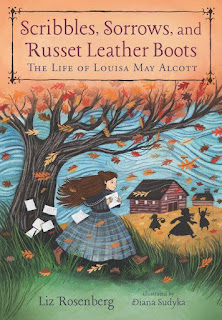
Middle-Grade Alcott Biography Intimate and Fascinating


Hitler Youth A Powerful Reminder for Modern Youth
 (Image from Barnes & Noble)
Bartoletti's focus is, of course, on the children. Hitler recognized the power of Germany's youth. He saw what a force they could be. So, he set about molding them into loyal servants. Not only did he re-write their textbooks, fire teachers who encouraged independent thinking, and do away with most youth groups, but he also persuaded them to join his own pro-Nazi club. Using snappy uniforms, bold flags, shiny badges, and the promise of adventure as bait, he lured boys and girls into becoming members of the Hitler Youth. Once there, the kids were plied with propaganda. They learned to become "good" Nazis, loyal to and supportive of The Fuhrer. As such, they were required to turn in anyone who made derogatory remarks about the Nazis, including their teachers, priests, friends and parents. The kids also performed hard labor, marched and drilled for hours, learned First Aid, and received weapons training. Above all, Hitler taught "unity" or the sacrifice of individual expression in favor of collective thinking. The stringent rules and demanding physical requirements became too much for some, but many stuck with it, happy to be part of the group.
By December 1, 1936, membership in the Hitler Youth became mandatory. Non-compliance meant fines, jail time, loss of job opportunities, even death. His demands were harsh, but Hitler had a purpose, of course: "A violently active, dominating, intrepid, brutal youth - that is what I am after. Youth must be indifferent to pain. There must be no weakness and tenderness in it" (43). For the most part, he succeeded in grooming his young army to become efficient killers, willing to die for their leader. The children knew they were fighting against the Allies, but most had no idea their revered Fuhrer was murdering millions of Jews. That grisly discovery led some, like the brave Scholl siblings, to take action against the Nazis. Others refused to believe, continuing to battle with blind allegiance.
In the end, although they caused numerous deaths, no members of Hitler Youth were tried at Nuremberg. The international court recognized that the children had been cruelly used by a power-hungry madman. Some were punished in civilian courts, made to pay fees, serve jail time, view gruesome films of corpse-strewn concentration camps, and rebuild what they helped destroy. Interviews of former Hitler Youth conducted by Bartoletti and excerpted in the book, reveal just how horrifying the situation was for the children involved.
No one can judge which victims suffered the most. We can only agree that one man's greed, hate and violent extremism brought about the physical and emotional murders of millions of people. Hitler didn't act alone, of course, but he, above all else, deserves to burn in Hell for what he did, not only to his "enemies" but also to the youth who served him with childlike devotion. With all the power he held over them, Hitler could easily have influenced Germany's children to do good. But, no, he led them away with the evilest of intentions. Hitler Youth shows numerous angel-faced children, arms raised in salute to the devil in brown - it's unbelievably chilling. Reading their stories makes my heart ache for the great loss of innocence, the marring of purity, the depraved indifference of adults toward the most vulnerable of German citizen.
The book never glosses over atrocities committed during the war, but it doesn't go into graphic detail either. Because it's meant for children, Hitler Youth dispenses information in an honest, readable format that allows readers to draw conclusions for themselves. While I don't think any book about Hitler and the Holocaust can be called "clean," I do feel this one is appropriate for older middle grade readers. It contains no profanity, really graphic violence or sexual content. While its subject is disturbing, the book does something very powerful for modern youth - not only does it teach them about what happened, but it also teaches them to question, to think and to never allow themselves to be coaxed down dangerous paths. Children are the future - only through knowledge of the past can they make sure it's a good one.
Grade: A
If this were a movie, it would be rated: PG for violence and mature themes
To the FTC, with love: I got this one for free - at the library.
Despite Lackluster Writing, Orphan Trains Is Powerful, Moving
 (Image from Barnes & Noble)
I talk a lot about my oldest daughter on this blog, but I haven't mentioned my 10-year-old son very much. It's not becaause he isn't a reader. He is. He's just not as funny and obsessive about books as his sister (and mother). Perhaps it's a guy thing, but my son rarely reads fiction (with the exception of the Diary of a Wimpy Kid books - he's read each volume at least 5 times); even his fiction is barely that. Lucky for him, our county library has a large collection of children's non-fiction, which is conveniently located in the kid's section. I've been taking him there since he was little - together, we've searched for books on every subject under the sun. When we moved last summer, we decided to try feeding his curiosity at the city library closest to our new home. Both of us left disappointed because the city library shelves all its children's non-fiction with its adult non-fiction, making it very difficult for us to find appropriate books on the subjects in which he was interested. We happily drove the extra miles to take advantage of the county library's superior organization.
I know you're starting to wonder what this diatribe has to do with anything. Not a lot, really, except that it explains what I was doing in the children's non-fiction section of the library. Since it's Spring Break, I took the kids to the library (twice, because my daughter read half of her 20 books in 2 days), where my son and I were searching for books about guns (boys, I swear). As we looked, my eye gravited toward the book pictured above - We Rode the Orphan Trains by Andrea Warren. Something about the simple, straightforward title captured my attention. Once I got the book home and started reading, I realized I knew nothing about the orphan trains. I had the vague notion they had something to do with the Holocaust, which turned out to be completely false. In fact, they were an American solution to the problem of finding homes for needy children during difficult economic times. The book uses firsthand accounts to describe this era and the tentative, sometimes troubling beginnings of adoption/foster care in The United States. Through the voices of the children who rode them, we can begin to envision the adventure, terror and excitement that came hand-in-hand with a ride on the orphan trains.
Between 1854 and 1929, administrators at The Children's Aid Society and The New York Foundling Hospital (among other institutions) placed an estimated 200,000 children on trains bound for the west. The idea was to relieve overcrowded East Coast orphanages by giving abandoned, homeless and orphaned children the chance to grow up in a stable, loving family. Thus, kids were packed onto trains, unloaded at various stops and exhibited to potential adoptive families. In the book, adult riders remember the humiliation of being displayed before the public like farm animals. Adults who were looking more for laborers than anything else examined their muscles, teeth, skin, etc., not unlike white farmers once did when buying slaves. Many of the children did find loving homes, although stories of abuse, neglect and abject cruelty were not uncommon. The book lauds the efforts of early child advocates, especially those who acted as "agents" on behalf of the children. Whatever your opinion of the practice, it makes for fascinating reading.
It's the individual experiences, recounted by the children who lived them, that really makes this book impactful. Warren, who has written a handful of books about kids in history, does her subject few favors with her dull, unspectacular prose; thankfully, the material can stand on its own. The voices of train riders (all of whom are now elderly or deceased) speak loudly through this book with stories of pain, suffering, happiness and longing. These are the stories of adult adoptees who remember the fear and thrill of boarding a train for parts unknown; being exhibited, then chosen by people of all stripes; and later, the frustration of searching for their birthparents/siblings with the little information available to them. Unique and moving, the stories will touch your heart and open your eyes to a relatively unknown phenomenon in U.S. history. Plenty can be learned from the riders' experiences about what it means to be a child in need; what foster care/adoption can do for such children; and what really constitutes a family. Despite the lackluster writing, this is a powerfully moving tribute to the brave children whose lives changed forever when their paths led them to board an orphan train.
Grade: B+


Readin'

Beach Thriller by Jamie Day

Listenin'

Hidden Rooms by Kate Michaelson



Followin' with Feedly


-
-
-
-
Sweet Spot by Kemper Donovan4 hours ago
-


Grab my Button!


Blog Design by:



2026 Goodreads Reading Challenge

2024 - Elementary/Middle Grade Nonfiction

2023 - Middle Grade Fiction

2022 - Middle Grade Fiction

2021 - Middle Grade Fiction

2020 - Middle Grade Fiction
